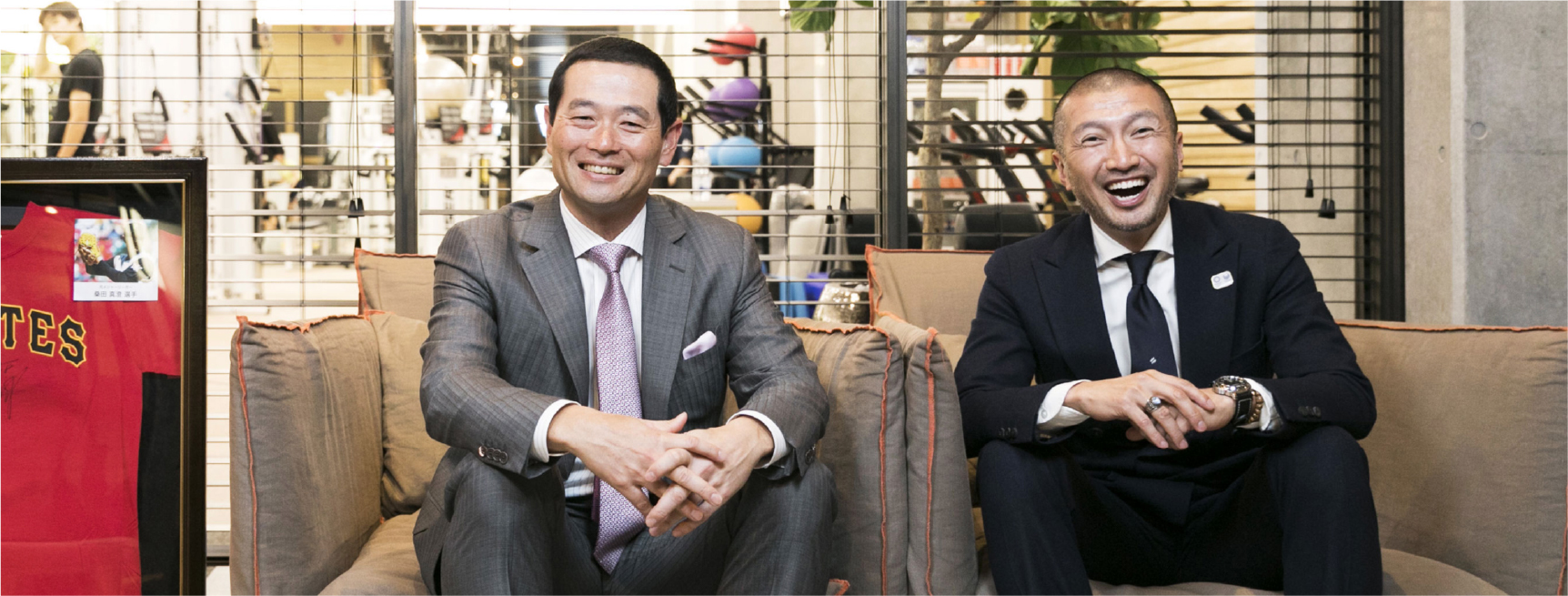
In-Depth Conditioning Discussion No.06With this body gifted to me by my parents, I want to make the most of my life
Nao Kodaira x Masahiro Yuki x Takeshi Suzuki. (R-body)
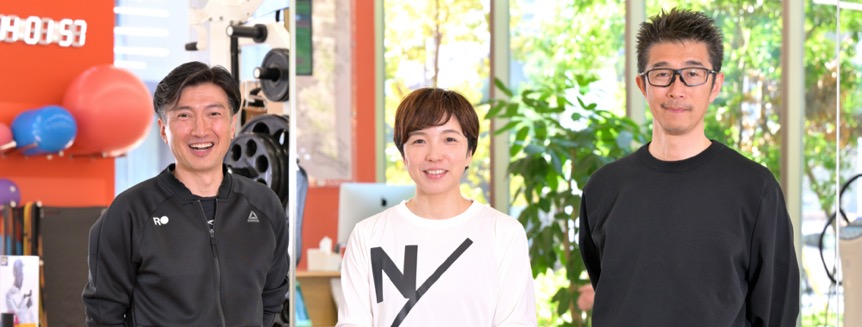
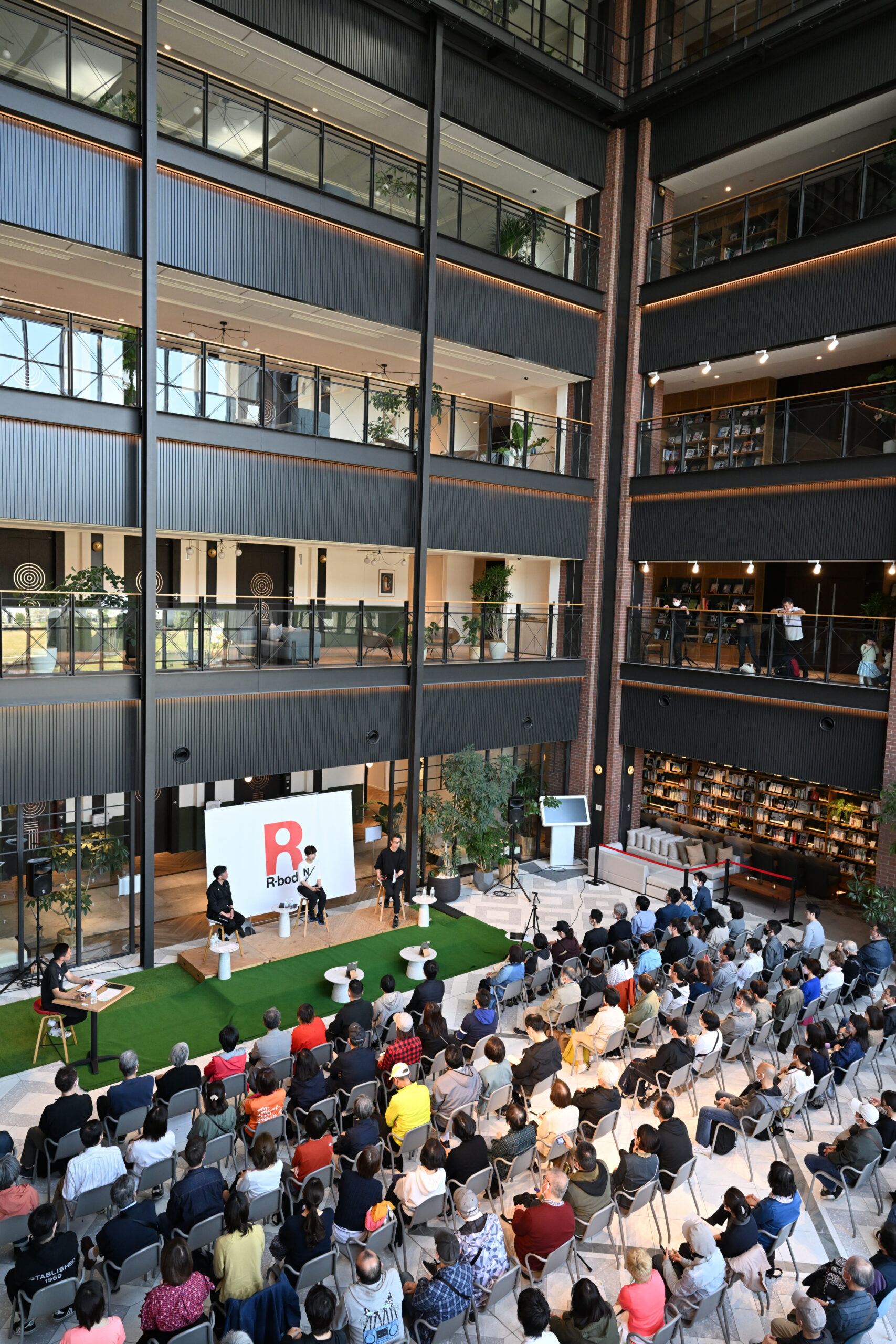
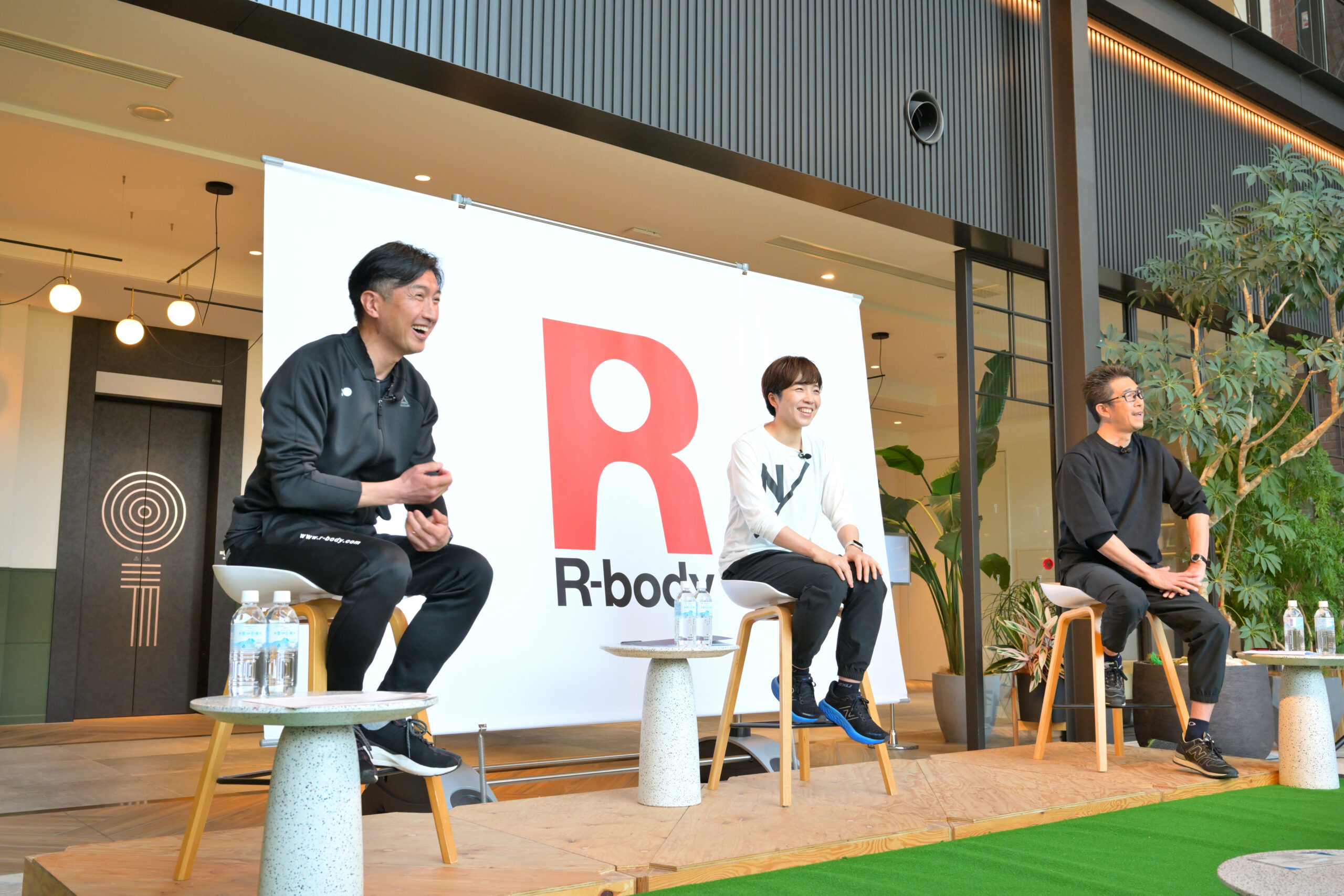
It's April 1st, and a 4-minute walk along the spacious sidewalk from Kashiwanoha Campus Station brings you to the stylish and modern KOIL TERRACE building. The first three people appeared outside the entrance at 8:00 AM. After that, the line of people stretched further and further around the block, growing longer as people arrive from as far away as Yamagata, Fukuoka, and Kumamoto. At 11:00 AM, standing before the 250 attendees in the venue and 240 online participants from Japan and abroad, Nao Kodaira slowly scanned the room. A smile gently spread across her face. "Wow, so many people came to see us," she thought. She was to be one of the guest speakers, joining Masahiro Yuki, and Takeshi Suzuki of R-body. All three of them boasted careers that would quickly fill this space, yet the subject for today was not about "Me, the gold medalist," or "Me, who nurtured the gold medalist," or "Me, who coached the gold medalist." Instead, the conversation was to focus on intelligent debate, innate passion, and gentle humor. The animated conversation drew acclamation, applause, and warm smiles from the audience, with time flying by as if it had wings. Even after the three left the stage, a buzz of energy continued to circulate around the room.
* This conversation took place in April, 2023.
Kodaira : Hello everyone. Well, I'm Nao Kodaira, and It's been five months now since I retired from competitive speed skating. I currently work at Aizawa Hospital. During my career, R-body took care of my conditioning training and supported me in improving my athletic performance. It's a pleasure to be in Kashiwanoha - I took a walk around the neighborhood this morning and it felt like a very livable environment where you can walk to get everything you need. The sidewalks are wide, and it kind of reminded me of an Olympic Village.
Yuki : Hello. I'm Masahiro Yuki, and I served as Nao's coach for pretty much all of her career. After 11 years of blood, sweat, and lots of tears, she was finally able to reach her potential and go two and a half years undefeated. In total we shared 18 years working together, going through the whole range of human emotions, but we stuck firm throughout the good times and the bad. I'd like to thank you for having us here today. This morning, I also walked around the area with Nao, and I too felt it's a wonderfully vibrant and dynamic city.
Suzuki : Hello everyone, I'm Takeshi Suzuki from R-body, and since I imagine everyone is here today to listen to Ms. Kodaira, I'll do my best to remain relatively quiet and focus on listening to her too! To that end, I'd like to thank you for coming here today. We've just heard your impressions of the town overall, but this atrium space here at KOIL TERRACE is also very unique. On the right over there, are bookshelves spanning the entire wall over 3 floors. Carefully selected books by genre - literature, travel, business, cooking, and so on - are displayed and regularly updated. There are also comfortable chairs to relax in, so I hope you take the opportunity to enjoy some leisurely time whilst you're here.
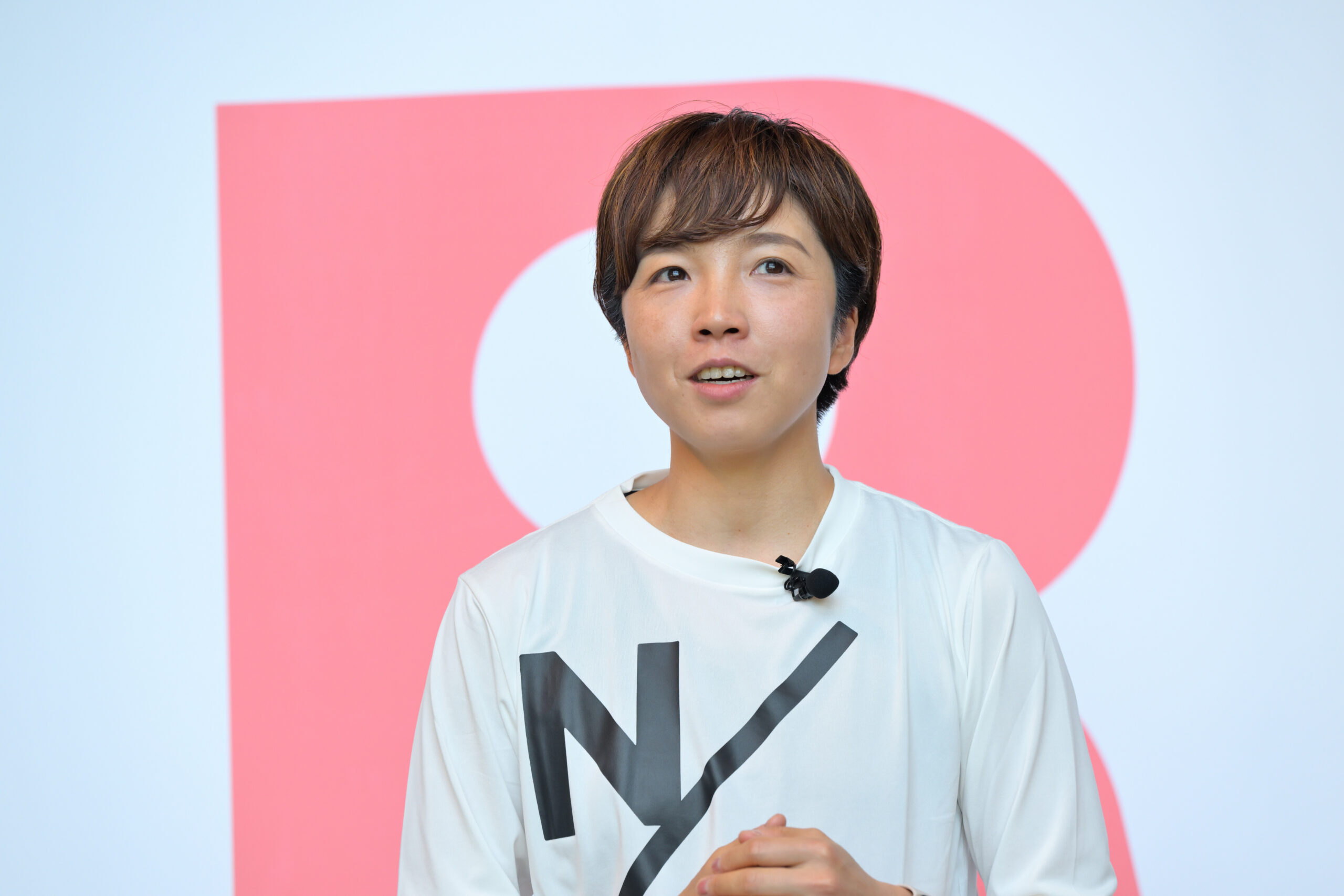
Nao Kodaira. Born in Chino City, Nagano Prefecture.
Currently works at Aizawa Hospital, an Incorporated Healthcare Foundation.
Graduated from Shinshu University with a bachelor's degree in education. Won the overall speed skating sprint title at the All-Japan Junior Championships whilst still in her second year of junior high school. This made her the first-ever champion of junior high school age, and she was dubbed a "Super Junior" of the skating circuit. She went on to win both the 500m and 1,000m titles at the Inter-High School Championships before entering Shinshu University, and majoring in Regional Sports within the Lifelong Sports Program at the Faculty of Education. Won her first All-Japan Speed Skating 1,000m Long Distance title in her sophomore year when she also made her World Cup debut. Won the 1,500m at the Winter Universiade (the World Cup for university students) in her junior year. After graduating from Shinshu University, she started working for Aizawa Hospital, an incorporated healthcare foundation, and based her activities around Shinshu University's Faculty of Education.
After competing in the Vancouver and Sochi Olympics, she studied abroad in the Netherlands for two years to improve her speed skating training and performance. Upon returning, she recorded an unbeaten streak of 37 consecutive wins over two and a half seasons in 500m races domestically and internationally (including 23 consecutive World Cup wins). She also won the overall World Cup 500m title twice. In 2018, she won Japan's first-ever Olympic gold medal in women's speed skating at the PyeongChang Olympics in the 500m event. She also won the overall title at the World Sprint Speed Skating Championships twice. In October 2022, she competed in the women's 500m at the All Japan Championships, which she had decided would be her final race. She was the only skater to break 38 seconds, achieving a dominant victory with a time of 37.49 seconds, her third-fastest time at this event. She secured her eighth consecutive title and 13th overall victory. Since retiring from professional speed skating, she has served as a specially appointed professor at her alma mater, Shinshu University.
From "Is retirement around the corner?" to 37 Straight Wins:
The Five Months That Forged Invincibility
Kodaira : I first met Mr. Suzuki at the Vancouver Olympics. I knew that like myself, he was from Nagano Prefecture, and when I bumped into him he was training the famous mogul skier Aiko Uemura, someone who I really looked up to.
Suzuki : Normally at Winter Olympics, the snow-sports athletes and the ice-rink athletes stay in separate villages, but in Vancouver they were all together in the same place. At the time, there was a snow shortage, so we couldn't practice skiing outside as much as we wanted. That was in 2010, some 13 years ago. Talking about it brings back fond memories.
Yuki : We watched him doing conditioning exercises with Aiko Uemura while we were doing our own workouts. We thought, 'Wow, they are doing some great training.' Back then, most exercises used the body symmetrically, like squats. But skating involves balancing on one leg most of the time, and using your body whilst leaning diagonally. Mr. Suzuki had so many exercises that used the body whilst leaning to one side, so his training made a big first impression on me. I thought, 'Could he maybe do some training sessions with Nao, too? But no, he's already looking after many important athletes, and the skiing and skating seasons overlap, so I guess it'd be tough for him to make time to train her.'
Suzuki : Back then, when you said, "You've done enough work training the skiers, it's about time you came over here to train the skaters", I just assumed you were joking!
Kodaira : After the Vancouver Olympics, next was the Sochi Olympics, and I returned to Japan in the March having studied abroad in the Netherlands for two years. Right after coming back to Japan, I visited the R-body branch in Otemachi for the first time.
Yuki : Since Aiko Uemura had retired, I asked if he could take care of Nao's conditioning training. It was in April that we visited, probably around this time of the year.
Suzuki : Those words spoken in Vancouver stuck with me - even if I thought they were partly said in jest - it was nice to hear. Then when both of them came to R-body, I realized, 'Oh, it was true after all.' It really did make my day.
Yuki : People say studying abroad made her stronger, but honestly, those two years in the Netherlands were incredibly hard for her. At the World Cup, during her second year, she failed to make the podium - a fifth place finish was her best result. Then, at the All-Japan Championships, she finished eighth. She was 30 years old, and the atmosphere around her was like her career was virtually over. In fact, she was only invited to do one newspaper interview during that period. But then, starting in September of that year she returned to Japan, and she began winning again. And not only the odd victory, she ended up with 37 consecutive victories. So while, I completely agree with Mr. Suzuki's comment that everyone is 120% here to listen to Ms. Kodaira and not us two, may I say a little more?
(The audience show their acknowledgment for him to proceed through laughter and applause that fills the open space all the way up to the third floor)
Yuki : Thank you. Well let me explain what we did. First of all, Mr. Suzuki created two different training programs for us to do at our practice base in Nagano, and we alternated between them continuously. In fact, Nao never took a single day off, but that wasn't my instruction; it was her own desire to improve. There were even days when we did double sessions: Program A in the morning and Program B in the afternoon. About a month later, we went to R-body for a follow-up to check on her progress, and they saw clear improvements in her physical condition, so we updated the program further. Then we just kept piling up the training days and making slight adjustments to the program for the next five months.
Kodaira : Every single training menu item I was given made perfect sense to me. Mr. Suzuki took the time to fully understand my body's physical make up, the good and bad habits I had developed in terms of my movement patterns, and then pinpointed the exact root causes of any pain or discomfort I was having. He then provided me with a set of specific training exercises to help me improve. Having a completely tailored training program like that, I became totally immersed in the training regime.
Yuki : When Nao returned from the Netherlands, she had some allergies bothering her that caused her body to be a bit swollen, but tests also showed her body fat percentage was slightly elevated. I spoke to Mr. Suzuki about this, saying, "I'd like to reduce her body fat percentage a bit." His immediate response was, "That's not something that we can properly fix through training. Body fat percentage is mainly down to what you eat." That was his candid response. I appreciated him being straight with me, and also for not letting us expect that we can just rely on R-body to do everything, i.e. just coming here doesn't automatically fix everything. At the time, there weren't many people who were willing to tell me things straight up like that, so having someone give me their honest opinion about things, even if it meant contradicting my opinion, meant a lot to me and I was really grateful to work with someone like that.
Suzuki : That's the first time I've heard that story from you…
Yuki : It's the first time I've confessed it!
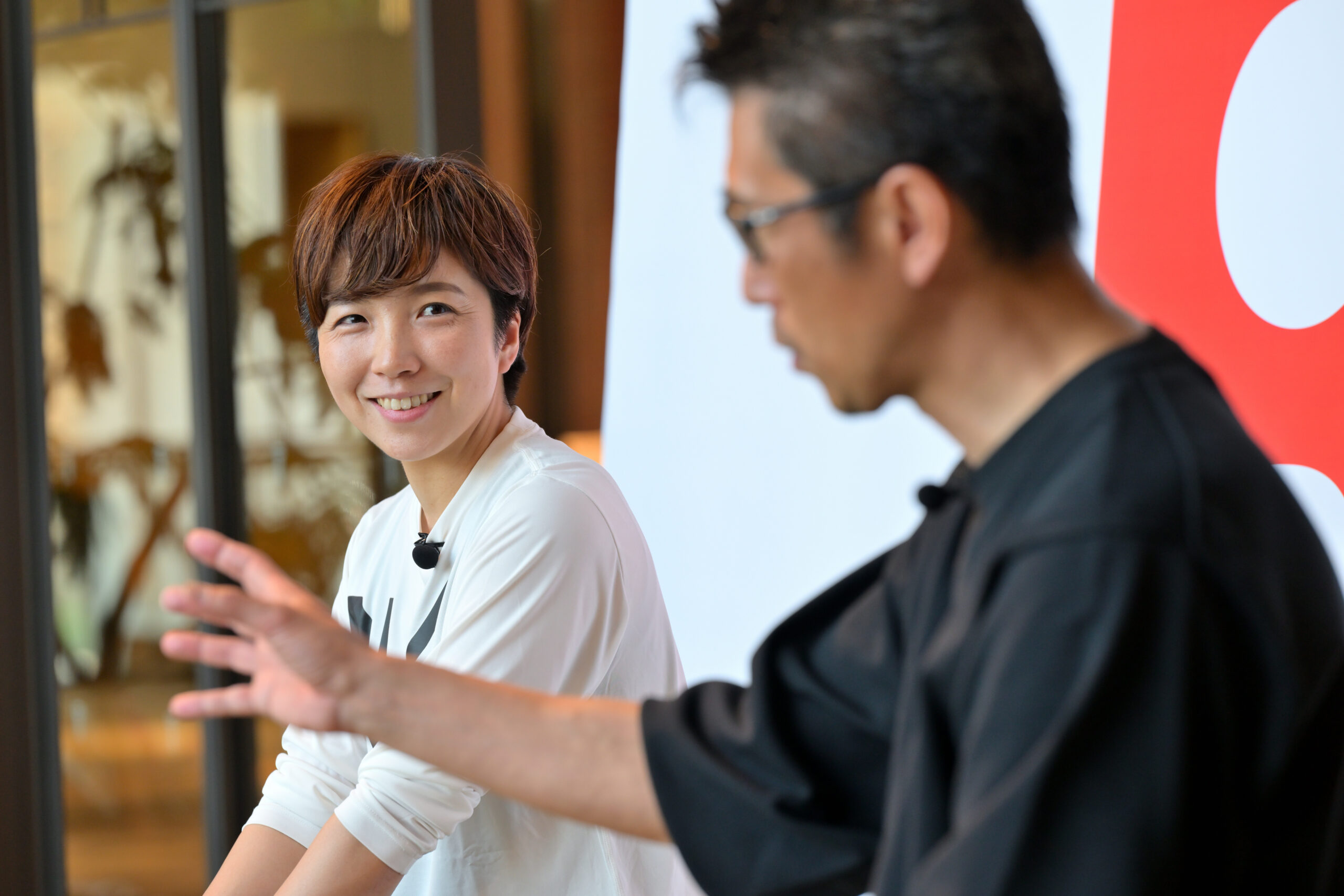
When your posture improves,
it also helps improve your circulation.
Suzuki : The term "conditioning" began spreading in Japan about 20 years ago, around the time we launched R-body. Many people just think exercise = training, but what's crucial is properly preparing your physical condition before training, and then you can train properly with that foundation in place. This field of "preparing the body" is what we call conditioning. There isn't just one type of conditioning program, and the best way to prepare your body will vary from person to person. For some people, the main focus might be on what they eat, while for others it could be doing stretches before bed, or even the amount of sleep you get. As athletic trainers, the type of conditioning we primarily focus on involves preparing the musculoskeletal system; that is the muscles, nerves, and bones.
Kodaira : Speed skating involves leaning forward in a crouched position, constantly turning left, and enduring significant g-force whilst moving. Repeatedly performing these unnatural movements inevitably creates imbalances in the body, disrupting its natural functional ability. Therefore, it's crucial to step back from the specific movements of the sport and make the effort to reset the body to its natural, neutral state. Without this reset, performance will inevitably decline over time.
Yuki : Furthermore, athletes usually won't even realize their bodies have gotten out of sync in the first place.
Kodaira : That's right. In that respect, when I returned from Holland, being introduced to R-body was a big moment for me, as it allowed me to realize the importance of getting my body back into proper alignment. Within the first three months, my body changed dramatically. As my posture improved, I think it eased the pressure on my internal organs, as I noticed my organ function got better. By getting my body into its natural, proper alignment, with good posture, I also began to feel the my blood circulation improve, and my metabolism started to function properly again. Experiencing this change firsthand, and seeing everything start to move in a positive direction, was truly eye-opening, and I found myself getting more and more hooked on conditioning training.
Suzuki : You mentioned there that "When your posture improves, it also helps improve your circulation" – that's a perception that most people wouldn't notice. That's what makes you unique. Over 1,000 top athletes have used R-body so far, and one thing they have in common is that they don't just mechanically follow the conditioning program we provide. Instead, they take the information on board, and then adjust it to make it their own unique thing. They understand how that program affects their body, how to apply it to their sport, and they have their own perception on how to implement it. In your case, this level of understanding and perception is extremely high.
Kodaira : When I first went to the Netherlands I started thinking, "It's not fair that I have to compete against people with such powerful physiques under the same rules." But then I realized that you can't change the body you're born with, so I shifted my focus onto always using my body to its absolute maximum potential. So that's why I have this ongoing inner-dialogue with myself, and that's how I learned to listen to the feedback my body was giving me.
Yuki : The Shinshu University skating club had just under 20 athletes, but Nao was always the first to arrive for practice. She did this in order to prepare her body for the practice session. She'd prep by standing on one leg, and shifting her weight whilst combining movements that used the inside, outside, front, and back of the blade's 1-millimeter-wide edge. Basically, skating mimics those kind of movements. But before getting into the specialist skating motions, she checked her body's condition each day. She would test the coordination between her lower and upper body, left and right sides, front and back, flexion and extension, or diagonal connections like between her right upper body and left lower body. Then, if she found any misalignments, like for example if her left hip was slightly out of position, she'd adjust it through conditioning exercises before starting training. No matter how intensely she'd trained the day before, she never once deviated from this daily preparation.
Kodaira : When it comes to conditioning training or maintaining a healthy diet, people tend to think that the key is will-power or to place restrictions on what you can do. But I see it more as a form of control. I believe conditioning training means gaining that sense of control over your own body and health.
Yuki : It's not about doing things because someone tells you to do it. It's about being driven by internal motivation, about 'wanting to be able to gain control over your body so you can move the way your want to'. You do it because you "want to do it", not because you "have to do it". When you truly want to do something, you are able to give 100% and keep going no matter what happens. Then when improvement occurs, it lights a small fire and provides even more motivation. When I watch Nao training, that's what I see.
Kodaira : Well, I'm thankful to the trainers at R-body, because whenever I do some kind of self-analysis and express my internal feelings, they always listen, try to understand what I'm saying, and then help me to progress. And it's not just one specific person - it's everyone. That kind of partnership allows me to relax, and then I can do even more self-analysis.
Yuki : I mentioned earlier about the motivation coming from within, and I truly believe that the motivation must stem from within the individual herself. Then it's the coach's job to interpret the athlete's visions and goals and find the best approach to proceed. Of course, there are hundreds of possible approaches to take, and they might even need to change on a daily basis. Ultimately, though, it boils down to understanding the athlete's dream and striving to make it a reality. For example, when Nao felt she was wasting energy in her skating, we shifted to a skating technique that gripped the ice with less force. The key wasn't just to have her analyze her technique and leave it at that, it was to get her to put her feelings into words, and then share it with her inner-circle, coaches, and trainers, so that they could help her make progress and further enhance her powers of self-analysis. In fact, she often says, "I enjoy knowing", and I believe that this enjoyment of acquiring knowledge is born out of her having a great relationship with the team around her.
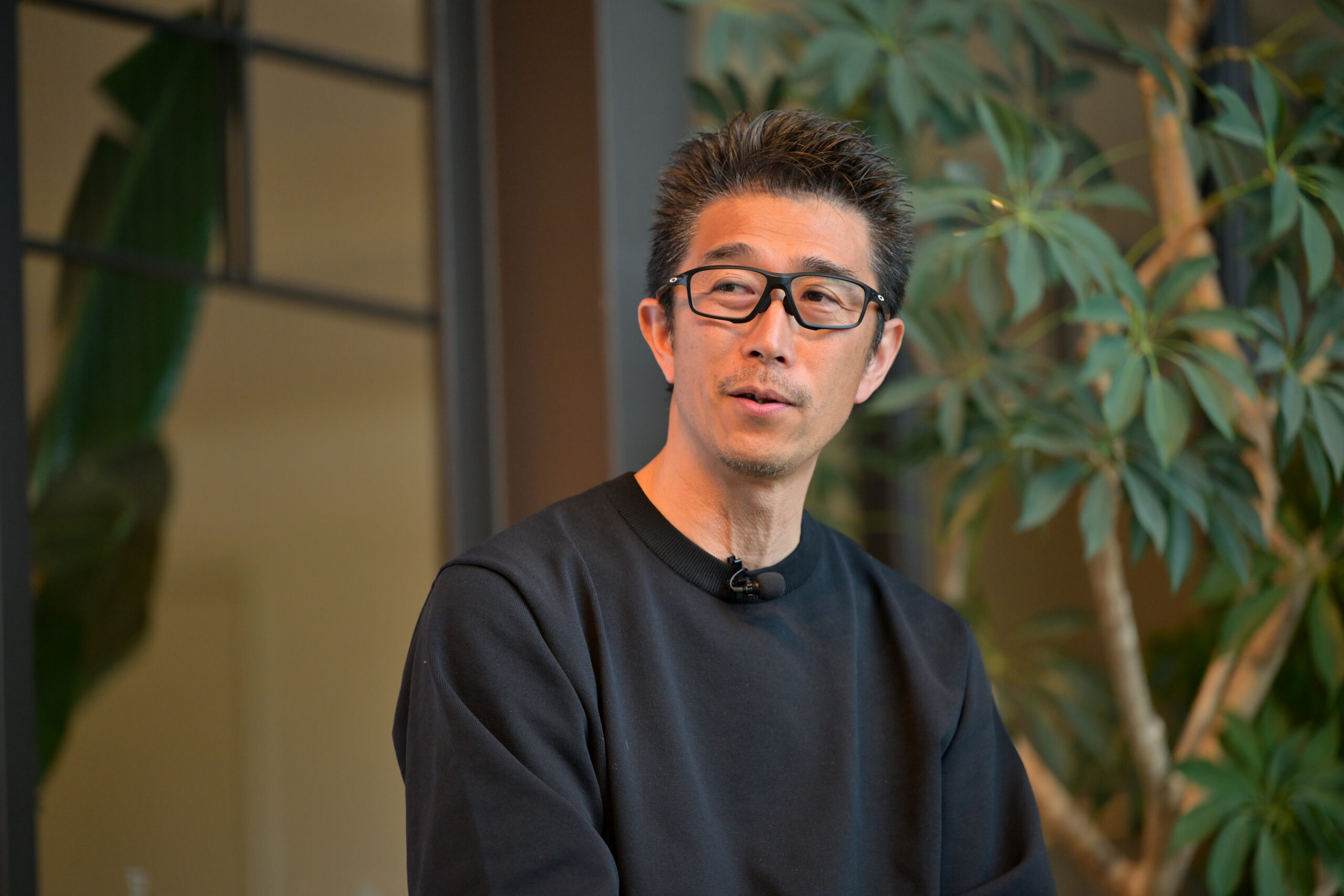
Masahiro Yuki, born in Hokkaido
Professor, Faculty of Education, Shinshu University
Former speed skater who competed in the World Cup, he graduated from the Department of Physical Education, University of Tsukuba, and earned a Ph.D. in Physical Education from the Graduate School of Physical Education at the University of Tsukuba. Currently a Professor in the Faculty of Education at Shinshu University. Serves concurrently as a Speed Skating National Coach for the Japan Skating Federation, and is a member of the Information, Medical, and Science Committee for the Japanese Olympic Committee, and also a director for several academic societies. He has been involved as a coach in six Winter Olympics: Nagano, Salt Lake City, Vancouver, Sochi, PyeongChang, and Beijing, contributing significantly to the gold medal wins of Hiroyasu Shimizu and Nao Kodaira. He has received numerous awards, including the Minister of Education, Culture, Sports, Science and Technology Award for Distinguished Service in Sports (eight times), the Prince Chichibu Commemorative Sports Medicine and Science Award, and the Japanese Society of Biomechanics Award.
Beyond your limits lies a world of "relentlessness" and "obsession"
Yuki : There's this kind of insane training regime I've done since back in my competitive speed skating days. You might call it "hardcore" training these days. You'd be shocked if you saw it. For example we'd do squats at 70% max weight - i.e.. a weight that you can just about manage 15 reps with - well, we'd do 20 sets of 15 reps, with a 90-second rest in between.
Suzuki : What weight is 70% for Ms. Kodaira?
Yuki : Back then, I think we started at around 100kg.
Suzuki : 100kg!
Yuki : Yes. For someone with a max of 120-130kg, lifting 100kg x 15 reps usually leaves them completely exhausted, unable to do another single rep. But then, 90 seconds later, it's a case of "Let's go again!" It's insane, absolutely insane training. But I believed then, and still believe now, that Japanese athletes, who often lack true core muscle mass, need this kind of training. Twenty sets of fifteen reps takes about forty-five minutes. After a while the barbell shaft starts to chafe you, and you start to get red blood stains showing through on your T-shirt. Right after we'd been doing this training, Nao went to Holland to study, and her Dutch coach asked, 'Why the physical punishment? Did you do something to upset Coach Yuki?' (laughs)
Kodaira : If you started that training regime suddenly, you could probably term it as a form of physical punishment. But because my body was already in good condition and well prepared; it wouldn't break down, and I could push beyond my limits. I think that was one of the key points that allowed me to break through my own ceiling. Beyond your current limits lies a world of "relentlessness" and "obsession", but if you only train within your current capabilities, you'll never get to experience it. I think that by linking R-body's training with our own training, we were able to find the window to enter that world.
Suzuki : Pushing yourself beyond your natural capabilities and into that world beyond, that also manifests itself in the awe we feel when watching as spectators, don't you think? That's how I see it as a fan, anyway.
Yuki : Actually, when Nao returned from the Netherlands, the very first practice we did was actually that crazy squat routine we just talked about. Everyone might think there is nothing scientific to my training and that I'm just some kind of demon coach, but it was actually her own request. "Coach, I need to train harder," she said.
Suzuki : Beyond physical conditioning, were there any other daily habits you consciously maintained?
Kodaira : In my daily life, I particularly paid attention to sleep and diet. I avoided eating out as much as possible and prepared meals based on advice from a nutritionist. As an athlete, I also started to focus more on metrics. Athletes are fundamentally good at pushing themselves, but precisely because we push so hard, we sometimes don't recognize if we're actually fatigued. So every morning, I made a point of tracking my body's condition through data - I started measuring the oxygen levels in my blood with a pulse oximeter, checking my temperature, pulse rate, and so on.
Yuki : Since the Olympic trials and the All-Japan Championships are always held at the M-Wave Olympic Memorial Arena, a speed skating venue in Nagano City, we didn't need to go away anywhere special for training camps. However, since the athletes all need to eat before going to the competition venue each day, we consider meal preparation itself as one aspect of our athletic training. The athletes attend lectures by trusted nutritionists, go grocery shopping (checking ingredients and prices), and then all members of our team, regardless of gender, participate in cooking practice. We split into teams of about five people, with each team making the same dish, and compete to see whose version tastes best. By doing this we have been able to create seven or eight new recipes for the Shinshu University Skating Club each year!
Kodaira : As Coach Yuki mentioned earlier, I discovered I had delayed-onset food allergies when I went out to the Netherlands. Foods I had been eating daily until that point, such as eggs, wheat flour, dairy product, were actually incompatible with my body, causing inflammation from allergic reactions. After eliminating those foods and switching to ingredients with similar nutrients, the swelling in my body disappeared within about two weeks. The results were so overwhelmingly positive that I continued, and eventually my blood stasis (poor circulation) cleared up, too. This allowed me to maintain a much more positive mindset and outlook on everything. As I mentioned earlier, I don't believe this comes down to "depriving yourself" or "placing restrictions on yourself", but is instead about maintaining control over your diet, or you might say, it's a form of "dietary conditioning".
Suzuki : Today, from a trainer's perspective, there are going to be two key phrases I'd like everyone to take away from the discussion. The first is "Total Conditioning." Earlier, we mentioned that conditioning isn't a one-size-fits-all approach, but instead will mean different things for each person. Recently, the one approach gaining traction is to comprehensively apply multiple conditioning approaches, just like what Ms. Kodaira does. This approach is called "Total Conditioning" and I think you'll be hearing more and more about this going forward.
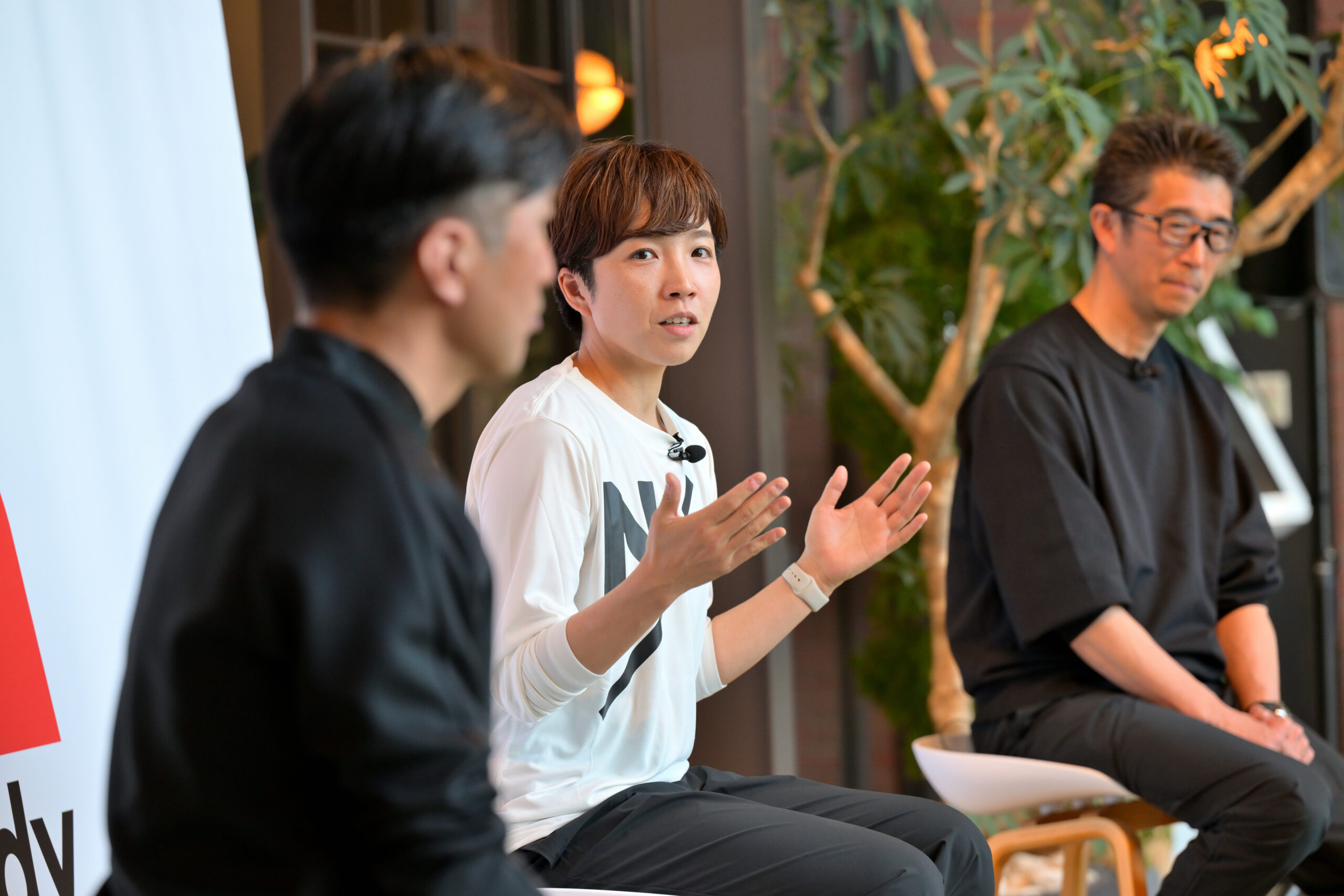
The feedback of others is essential to help you understand your own flaws
Yuki : May I add something here? I said earlier that conditioning training will benefit one's skating, but I think I should clarify that without first gaining the sensations of high performance on the ice, there won't be any link between conditioning and improved athletic performance. What I mean to say is that conditioning training must be based on the unique performance sensations inherent to each sport. In baseball, for instance, you need the specific sensations of catching the ball cleanly in your hand, or hitting it squarely on the sweet spot of the bat, before conditioning exercises can start to show any real benefit. So skaters must first do lots of ice skating practice. Then, once they have mastered the movements and techniques unique to their sport, that's when conditioning can enhance their performance by allowing them to reproduce those perfect movements more consistently. That's my view as a coach.
Suzuki : Yes, I completely agree that each sport has unique sensations based of the movements and techniques involved, and that conditioning should focus on enhancing these sensations or making repetition more consistent. Therefore, I recommend that everyone, before starting conditioning, should first find a sport or activity that they enjoy. And it doesn't have to be particularly intense or demanding or even something that requires much equipment. Tennis is fine, hiking is fine. So why should choosing a sport or activity comes first? Because conditioning itself is never going to be inherently fun. It's going to be pretty mundane without a goal or purpose, and then you simply won't stick with it. But if you have a goal like improving your tennis game, or being able to hike up difficult trails, then it will give meaning to it. For example, you often see commercials for exercise gimmicks that they are trying to drum up interest in, saying things like “Come on, everyone, let's do this together!” But you can't simply take something boring and make it fun. Even when it may seem fun, that is usually superficial and then everyone gets bored quickly. So I believe our role at R-body is to help you understand the exact meaning behind conditioning; that is so that you can enjoy sports and exercise to your maximum potential and enrich your overall lifestyle.
Kodaira : What helped me get really into conditioning was precisely that I understood the context and how it could help me.
Suzuki : I hope everyone can find their own equivalent of speed skating, and hence understand the significance of doing conditioning training.
Yuki : When I mentioned about conditioning being centered around boosting athletic performance, I thought I might have taken the conversation off at an unnecessary tangent, but it actually turned into a really good discussion.
Kodaira : Yes, there were some good points that came up unprompted.
Yuki : I can assure everyone that this part was not rehearsed in any way!
Kodaira : Not everyone who comes to R-body is a top athlete. In fact, most members are just regular people. However, since we do conditioning training side by side on the same floor, I can quietly observe them, and it strikes me that their level is incredibly high. I feel they have a deep interest in their own bodies, and know how to take care of them. And the trainers genuinely take care of them with the desire to improve any pain or discomfort they have. They possess the knowledge and experience to pinpoint the cause of pain and have a wide variety of exercises to help them. I know this from my own experience. Even when you think you're doing something correctly, sometimes your perspective is slightly off compared to when viewed from another angle. For example, you might be consciously trying to stand straight upright relative to the ground and you might think you're performing it correctly, but through the trainer's eyes, they might notice that you have your left hip slightly raised or your right hip dropped. As you follow their advice to correct it, it's not just your posture that improves; your whole sense of alignment gets re-calibrated. I think this is where the common ground lies between the conditioning done for high performance by athletes, and the conditioning done by the general public for improving one's "life performance".
Suzuki : Yes, and the members are good at maintaining a comfortable environment for everyone, so there is no hysteria or anything like that, and people don't exclaim "Oh, Kodaira-san is here!" or "Can I get an autograph?" Sometimes it makes me wonder, "Do they even realize it's Kodaira-san?" (haha) Everyone is just going about their usual conditioning routine.
Kodaira : It's good that everyone is focused on themselves, right?
Suzuki : Yes, and often it's not the general public observing professional athletes' training routines. Instead, as you just mentioned, it's often the other way round, and the athletes often secretly observe others and tell our trainers, "Wow. That person's form is incredibly good." I'm always impressed both by the depth of knowledge shown by the athletes and also the high level of understanding displayed by the general public. We strive to create a good atmosphere on the training floor at R-body, and I'm proud of the fact that everyone can feel at ease while working out here.
Kodaira : Seeing a member of the public execute a movement perfectly that I can't do as a professional athlete - that is where genuine respect comes from.
Suzuki : Earlier, you mentioned high performance and life performance. This is the second key concept I want everyone to take home today. High performance refers to the performance of top athletes like you, aiming to be the best in the world. Life performance on the other hand is about trying to get your body into the best shape possible to perform everyday tasks. Currently in Japan, as part of the Olympic legacy, a movement is emerging called "From High Performance to Life Performance." This means taking what we do in high-performance settings and applying it to general life so that people can achieve long-term well-being and fulfillment. At R-body, our company motto and promise to our clients is encapsulated in the phrase "Bringing the Real Thing Closer". For the past 20 years, we have been working precisely on this shift "from high performance to life performance" as we try to provide the same level of conditioning services that we've provided to top athletes, like Ms. Kodaira, to the general public to help them improve their overall well-being. Going forward, when members hear the phrase "from high performance to life performance," we hope they will understand that they are receiving services born out of the training given to top athletes.
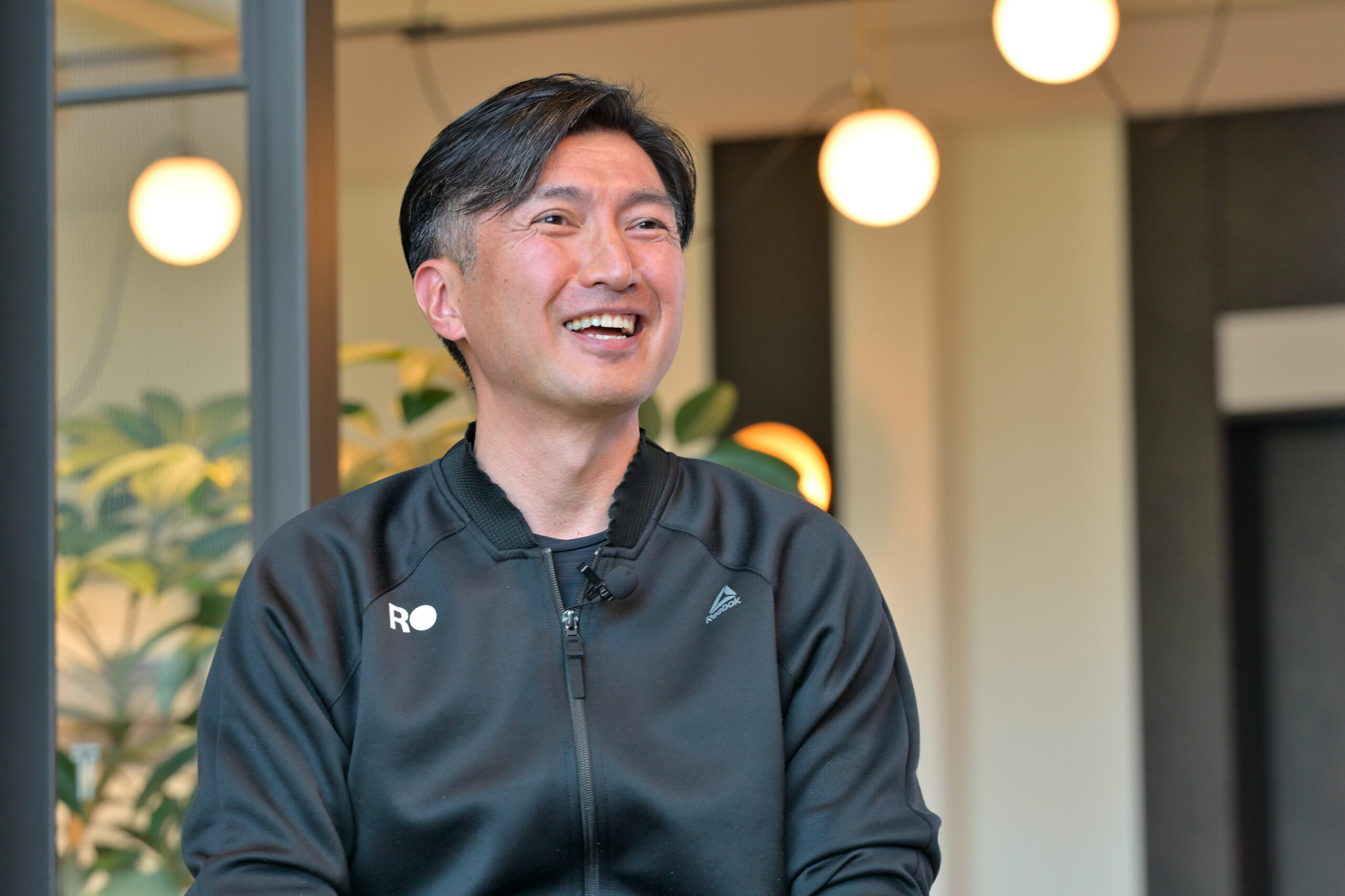
Takeshi Suzuki. Born in Tokyo
President & CEO, R-body Co., Ltd.
After graduating from university, he studied abroad in the United States and obtained the National Athletic Trainers' Association (NATA) Athletic Trainer (ATC) certification. He returned to Japan in 1997 and became a trainer for the Japanese National Freestyle Ski Team. He accompanied the team to four Winter Olympics: Salt Lake City, Turin, Vancouver, and Sochi. At the Summer Olympics in London and Rio de Janeiro, he served as a member of the Japanese Olympic Team's Medical Staff. For the Tokyo Olympics and Paralympics, he supported athletes from around the world as Manager and Chief Trainer of the fitness center within the Athletes' Village. He established R-body Co., Ltd. in 2003. The company operates sports training and therapy facilities in Otemachi (Tokyo), and Kashiwanoha (Chiba). The company also operates an academy (R-body ACADEMY) for trainer development, and has many collaborative business partnerships primarily supporting operations for hospitals, treatment clinics, and fitness clubs both domestically and internationally. The company is also engaged in creating healthy communities in collaboration with local governments nationwide, starting with Higashikawa Town in Hokkaido.
A Relationship that Goes Beyond Teaching and Coaching
Suzuki : Recently, now that I've been a trainer for over 25 years, I've increasingly had opportunities to speak with athletes as they retire. And whilst it was always incredibly exciting to have conversations with athletes during the peak of their careers when they were competing for medals and so on, it is also really interesting to speak with athletes as they are about to embark on a new chapter in their life post-retirement. As I listen to the two of you speaking now, I like how what you say goes beyond training and conditioning, the things you say are quite philosophical in nature and deeply connected to the very essence of how to live one's life. By the way, Ms. Kodaira, I heard you were so determined to study under Coach Yuki that you chose an academic course at a high school that didn't have a skating club, just so that you could apply directly to Shinshu University.
Kodaira : Yes. I first learned about Coach Yuki in the winter of 1998, when the Nagano Olympics were on. He was coaching Hiroyasu Shimizu at the time and appeared on TV discussing the science behind skating. Even though I was still only a fifth grader in elementary school, he explained it in such a logical way that I could clearly understand everything he said. I thought to myself, "Wow, there are people like him researching and developing all kinds of new theories. This person belongs to a whole world I don't know about." At the time, I'd never had formal skating lessons before, so I was truly excited at the prospect of learning under him. I made it my mission to go to him and learn from his knowledge and experience. So, in my third year of junior high, when I filled out the career survey form listing my desired high schools, I wrote down Shinshu University without hesitation. My teacher told me, "First, let's get you into an appropriate high school."
Yuki : When I moved to Shinshu University in 1999, I was shocked to find the Olympic skating rink in Nagano was barely being used. Realizing things needed to change from the bottom up, I immediately started a junior skating club. While taking those kids to an elementary school competition, I heard about this incredibly fast sixth grader named Nao Kodaira, who'd apparently set a new meet record. But at the time, I didn't know which one was her. So I didn't actually see her race for the first time until I went to an Inter-High event when she was a first-year high school student and placed second in the 500m. I thought, "She's got incredible power," but honestly, I thought her technique was still somewhat lacking. Then, as a third-year high school student, she won both the 500m and 1,000m at the Inter-High, took the All-Japan Junior title, and came to Shinshu University.
Kodaira : When it was time to take the entrance exam, I was so nervous I felt sick, but somehow I managed to pass and was accepted to skate under Coach Yuki.
Yuki : When I saw her skate up close for the first time, my initial thought was, "She won't be able to compete on the world stage with that technique." She was powerful enough, but she wasn't transferring that into forward speed. Her skates were slipping away behind her. I told her "Nao, you're going to struggle unless you change your skating technique." When I said that, she just beamed back at me. I think she'd been waiting for that moment to start her path of improvement.
Kodaira : I guess I was ready to move up to the next level, and I was looking forward to getting into the science of it.
Yuki : It was funny, because she kept saying the words "world level, world level” like it was a mantra of hers. I thought, "This kid's a bit strange. I'm telling her that her skating technique won't cut it and she's banging on about competing on the world stage."
Kodaira : I just wanted to become an athlete who could compete on the world stage, so I only had eyes for that. Even after winning the All-Japan High School Championships or the Inter-High events, I wasn't satisfied as I wasn't interested in just being the best in Japan. Then my coach told me, "Let's stop all this talk of world level, can we?"
Yuki : That's right, because she was a long, long way off the world level at that point. But then, nine months after she enrolled at Shinshu University, during a practice session in January, I noticed a sudden transformation. It was 17 years ago, but I remember the scene as if it were yesterday. We used to do this quite unique training exercise where they would test their strength against each other on the ice. So anyway, right after doing that, she skated one lap of the rink and showed truly amazing extension during her skating strides. I thought, "Ahh!" and said, "That's it, Nao, that's the skating form I want to see!" She replied, "Coach, it just seemed to click, it felt totally different." Then two months later, in March in Canada, she started saying things like, "Watching the Canadian skaters, I understand what it is you want me to do," and "I'm starting to understand the Dutch skaters' glide and technique." She skated a time that would have been a world junior record if her birthday had been just one month later. And ten months after that, as a sophomore in college, she won her first All-Japan Championships and debuted in the World Cup. I kept telling her not to keep saying "world level, world level," but I'm happy to say I have to eat my words!
Kodaira : After that race in Canada, I really wanted to keep skating, but the season was already over. However, that shift in technique became the catalyst to keep improving. I now knew exactly what I needed to do the following summer, and from there on I could push forward with clarity and determination.
Yuki : Even when there's a big gap between an athlete's target level and where they are now, if they feel something changing or some improvement, it allows them to push themselves really hard. On the flip side, when there isn't that sense of anything changing or improving, even if their target is almost within their reach, I tend to feel like there's nothing we can do about it.
Kodaira : As a coach, you always set things up so we can visualize ourselves getting better or imagine a bright future, don't you?
Yuki : I always tried to have something on hand that would make them think, "Oh, I want to try that," and then it was just a case of timing when to introduce it. For example, the day before an important tournament, on the way home from practice, I'd say, "Next year, I'm thinking we should try this kind of practice." Then, even if they lost, it would give them something to look forward to, and a new avenue for possible improvement. It wasn't about creating a way out or giving them room for excuses, but rather showing them that there were still future options available, and hopefully give them a spark of excitement. I thought that was my job with Kodaira-san, too. A big part of it was also to take off the pressure and help them relax.
Kodaira : Oh, so relieving the pressure was also part of the reason for doing that?
Yuki : Yes, seeing you up close everyday, I felt you were actually quite sensitive to pressure. Even though you'd say that you didn't feel under pressure to perform.
Suzuki : One thing we often hear is that it's better to 'coach' than to 'teach', and to that end it's important to know when to stand back and let the athlete think and come up with solutions for themselves in order to grow. What you two are describing her seems to take that to another level.
Yuki : In her case, she had already done everything she could on her own. To reach the next level, she needed some outside help. However, for many of the other athletes, they still have plenty they need figure out by themselves, so I try not to intervene too much.
Kodaira : One of the strengths that Coach Yuki has is knowing how to time things, like realizing when it was right to connect me with R-body, or handing me interesting articles with a casual "Why don't you take a look at this?" He always knew just what I needed at that particular moment of my career, and I always gobbled up the information he provided as I was desperate to learn more. I really feel that this was a key point in bringing me to where I am today.
Yuki : One of the main reason I tend to recommend things to athletes is because I find them interesting myself. For example, with Hiroyasu Shimizu, I suggested looking at how horses run or how cheetahs run. I was intrigued by the way they use their core, similar to the way a caterpillar moves. In terms of R-body, when we watched Suzuki-san training Aiko Uemura in Vancouver, I thought, "If I were an athlete, I'd definitely want to try that kind of training." So that's why I recommended R-body to Kodaira-san and connected her with Suzuki-san. It's a bit like food, you don't recommend that someone tries something unless you yourself think it tastes good, right? Of course, Japanese people are quite humble so will usually say, "It's nothing special," while offering something they recommend, but that's another story!
Kodaira : One thing that has really helped is that Coach Yuki genuinely listens to me and tries to understand my point of view. That puts me at ease, and allows me to build up my powers of self-analysis and introspection.
Yuki : Yes, I think it's important for the athletes to have that freedom to express themselves. For example, if Kodaira-san was trying to learn some new technique, she would be like, "Is this the correct way to do it? No, it doesn't feel quite right. What about if I do it like this?" She'd try various things, gradually refining her technique, and then suddenly she'd grasp it, and be able to express it in her own style. Giving encouragement and feedback, and then witnessing the moment that she gets it right and being able to say "Yes, that's it!" is one of the most rewarding things for me as a coach.
Kodaira : It's the same with Suzuki-san, when he felt a certain thing was crucial to my progress, he'd come straight out to our training facility to help us make sure we were doing it correctly. He'd make the trip all the way out to our training base.
Yuki : Yes, and our training facility was not exactly a nice, fancy gym with all the equipment; we just had a make-shift area, a bit like a shed. Plus he would often rush out to see us still dressed in his business attire. 'Ah, he must have rushed here straight from a meeting. He was so busy he didn't even have time to change.' I was truly humbled that he would make time for us in that way.
Q&A Session
Q. How did you control your mental state?
Kodaira : Recently, many athletes and sports professionals are hiring mental performance coaches, but I never once considered hiring one or doing any kind of mental performance training. When I think about how I overcame problems and setbacks, the biggest factor was having Coach Yuki on hand. Having someone you could trust, who would listen to you, that gave me control of my mental health. Another thing I truly believe is that if you properly take care of your body, then your mind will take care of itself. The "brain-gut connection," often discussed lately, shows how gut health can affect the brain. It's a good way to describe the interplay between the body and mind. When your spirits are low, you naturally think that you need to fix your mind. But instead of heading straight off to see a mental coach, first re-assess your body. I think this also comes down to the aspect of "total conditioning" that Suzuki-san talked about earlier.
Yuki : Athletes who set winning as their primary goal often become satisfied once they achieve it. Looking back, I think Kodaira-san also probably wanted to win at first, when she was starting out and hadn't achieved a big victory. But once she started winning consistently, that alone wasn't her sole motivation. She was skating at a level where she became focused on how far she could pull ahead from the skater in second place, or on how close she could get to the male athletes' times. By the end, the atmosphere in the other team camps was all about trying to beat Kodaira, be that skaters from the Netherlands, the USA, Russia, or Korea. When she won, not a single foreign rival, not even the coaches, would congratulate her.
Q. Moving forward, how do you plan to utilize your career as a top athlete?
Kodaira : Well, the day I won the gold medal, I thought, "This isn't exactly all I thought it would be." When I considered about whether winning and being celebrated truly brought happiness, I couldn't find that much fulfillment there. However, even though I felt a little detached about the gold medal itself, when I saw all the people who were happy for me, and who had shed tears for me, it made me realize I was in a place I wanted to be. Moving forwards, I'll try to be active in my community and give something back based on what I've experienced. One way I think I can do that is by connecting people, giving them smiles, joy, and courage. As an athlete, I wasn't fiercely competitive. I'm actually the type of person who prefers to avoid competition and conflict, so I hope I can be someone who helps to create a softer atmosphere for everyone. Until now, sports were central to my daily life, but that will change. As I enter society and start to do regular work, I know I must make time to keep my body active within the demands of my new lifestyle. I also hope to get involved in some kind of local group, doing physical exercise and promoting a healthy lifestyle, and then keep that sort of life-cycle going.
Q. What kind of thoughts do you have about your predecessors?
Kodaira : I always felt that I am who I am today because of those who came before me. A particularly significant moment for me was watching Hiroyasu Shimizu at the Nagano Olympics. He really blazed a trail. When I saw him compete against athletes who were much more physically imposing, it gave me inspiration and belief that I could one day do the same. Now, I hope I can fulfill a similar role for the younger athletes of the future.
Yuki : Seeing Kodaira-san here today, it feels like I'm giving a send off to a graduate student. Personally, I have two major hopes for her in the future. One is that she'll continue to show her humanity to the world, floating in like a gentle breeze, just as she did here today. The other is that she will offer guidance to the future stars of Japanese sport, especially when they are struggling. I've seen many instances where athletes get crushed under the weight of expectation or fame, but as captain of the Japanese team, Kodaira-san was an expert at deflecting that pressure. The star players have struggles and pressure that only other superstars can understand, and only they know how to overcome. So I hope Kodaira-san will pass on her experience as a mentor to the next generation.
Q. What helped you sustain your motivation?
Kodaira : In a word, it was simply life itself. We've been given one life and one chance to make the most of the body we've been gifted from our parents, so living up to my potential and making the most of my life was my main motivation. For me, skating was one means of doing that. The modern world is full of stress and hardship, and some people get tired of living, even to the point that they may take their own lives. So another motivation for competing was that it may give hope to other people, seeing me express what it meant to be alive through skating. Actually, I think many top athletes retire when their bodies and minds are shot to pieces. I didn't want that for myself. I had this strong desire to keep my body vibrant, to master and control it, right up until the very end. I happened to sprain my ankle a month before the Beijing Olympics, undoing four years of hard work, but I didn't retire at that time because of that desire to go out on my own terms.
Well, everyone, today has been a real pleasure. I've thoroughly enjoyed the chance to converse about a wide range of things, and hope everyone has learned something on the way, too. In terms of my future, I'll be stepping away from competition, and living as a member of the community alongside everyone else from now on. I believe this change will bring new perspectives to my life, and I look forward to seeing what challenges lie ahead. I especially look forward to "enhancing my life performance", and I hope that all of you will do the same. Thank you all so much for gathering here today, and for giving me the opportunity to share my thoughts and experiences with you!
SPECIAL TALK SESSION
-
No.0515cm of Infinite Potential.
Hiraku Misawa x Takeshi Suzuki. (R-body)
-
No.04To avoid going down a rabbit hole.
Yuji Naito x Takeshi Suzuki (R-body)
-
No.03Living healthily until 100 years old
Kimiko Date x Takeshi Suzuki (R-body)
-
No.02Raising the Profile of Japanese Athletic Trainers
Kosuke Kitajima x Takeshi Suzuki. (R-body)
-
No.01Getting to Know Your Own Body
Masumi Kuwata x Takeshi Suzuki. (R-body)