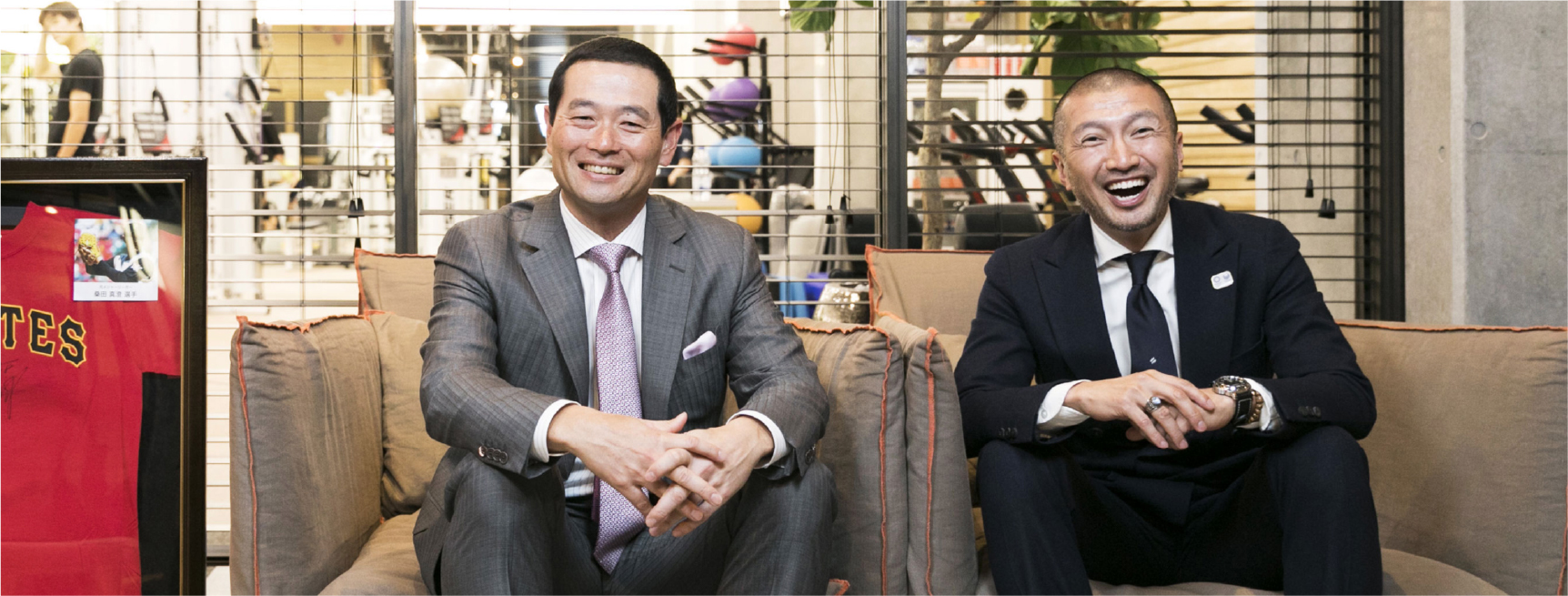
In-Depth Conditioning Discussion No.03Living healthily until 100 years old
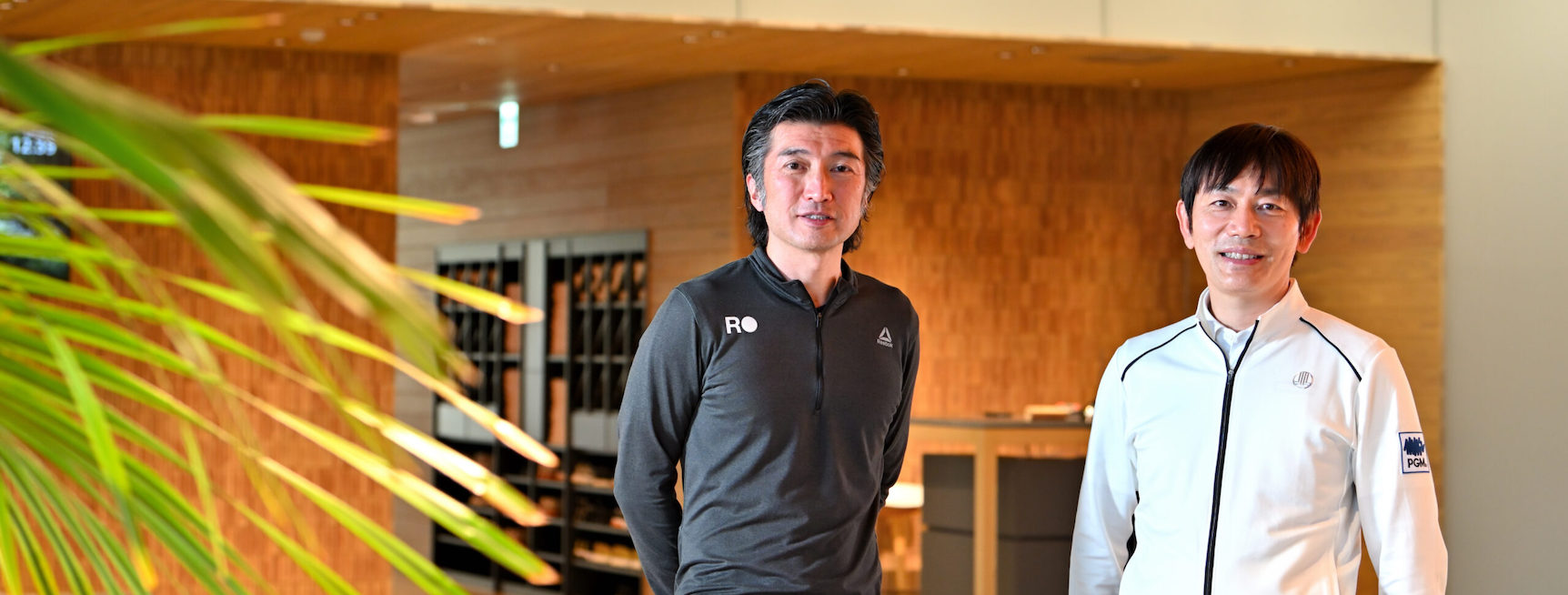
Kimiko Date x Takeshi Suzuki (R-body)
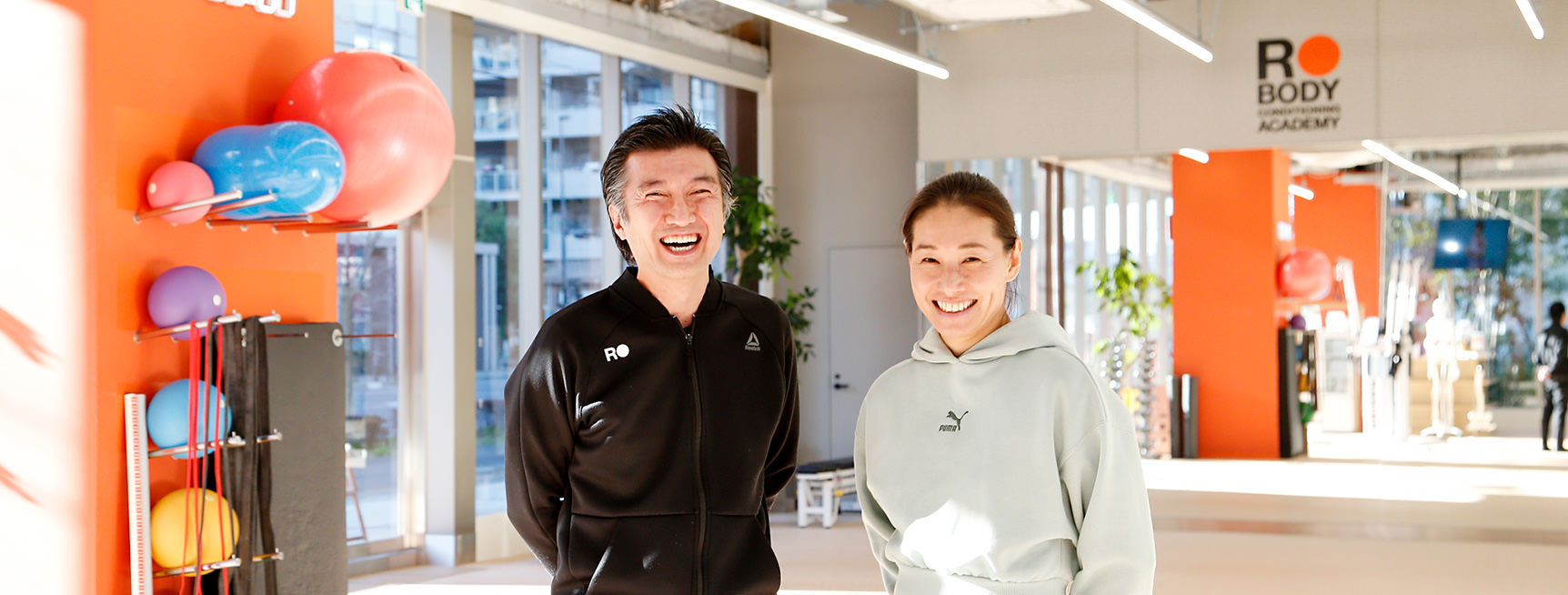
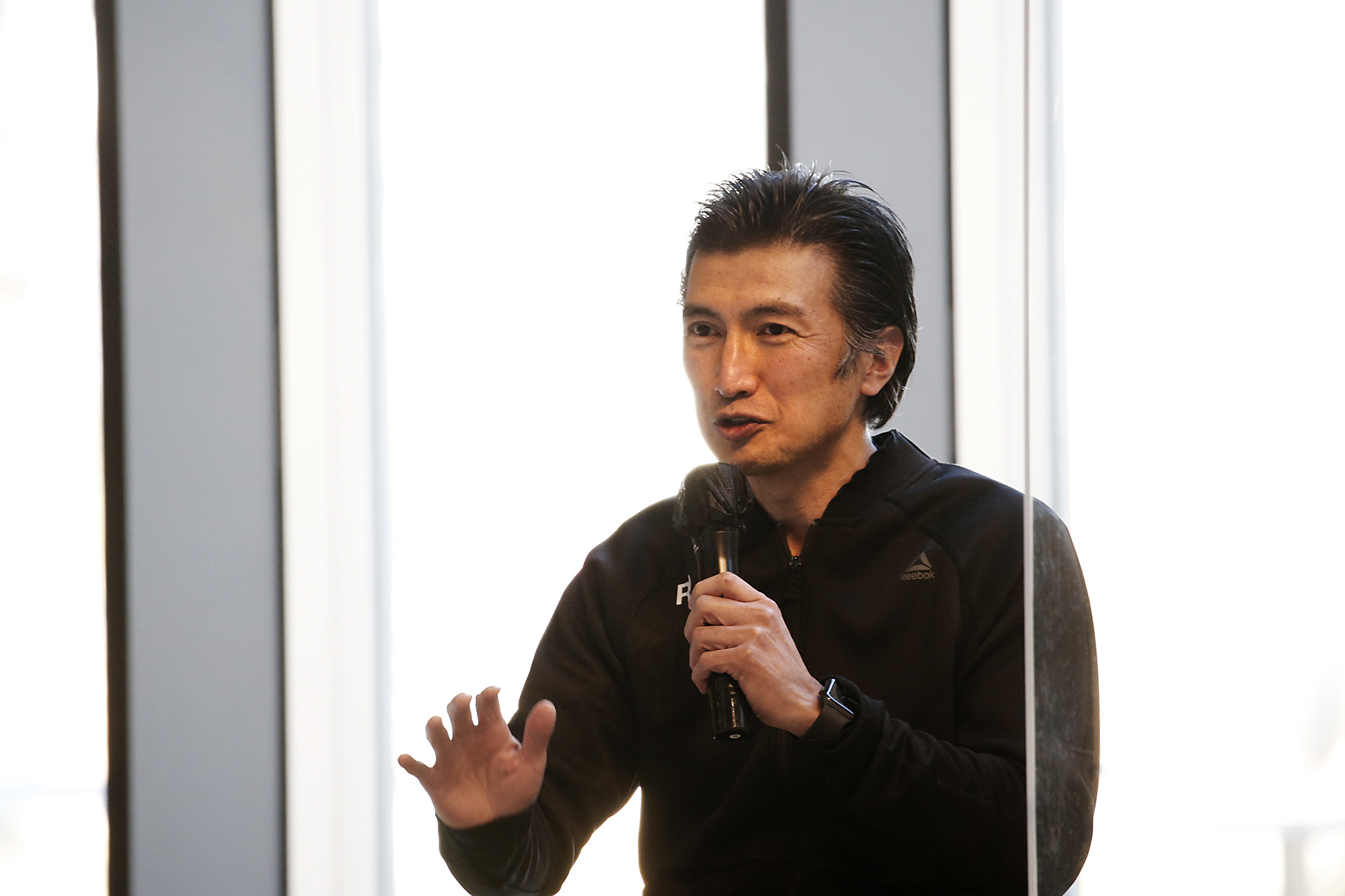
Over 500 Olympians and top-level athletes have undertaken conditioning training at R-body, but only two have continued after retiring from active competition. One of them is Kimiko Date. Her goal is to continue playing her beloved sport of tennis until age 100, and also to maintain a healthy body that will allow her to take care of herself until she is 120 years old. We currently live in an era when people can live to be over one hundred years old, but with no guarantee of government support, how should we approach our physical well-being? Here we share her knowledge and passion for conditioning training that she believes will help her meet her life ambitions.
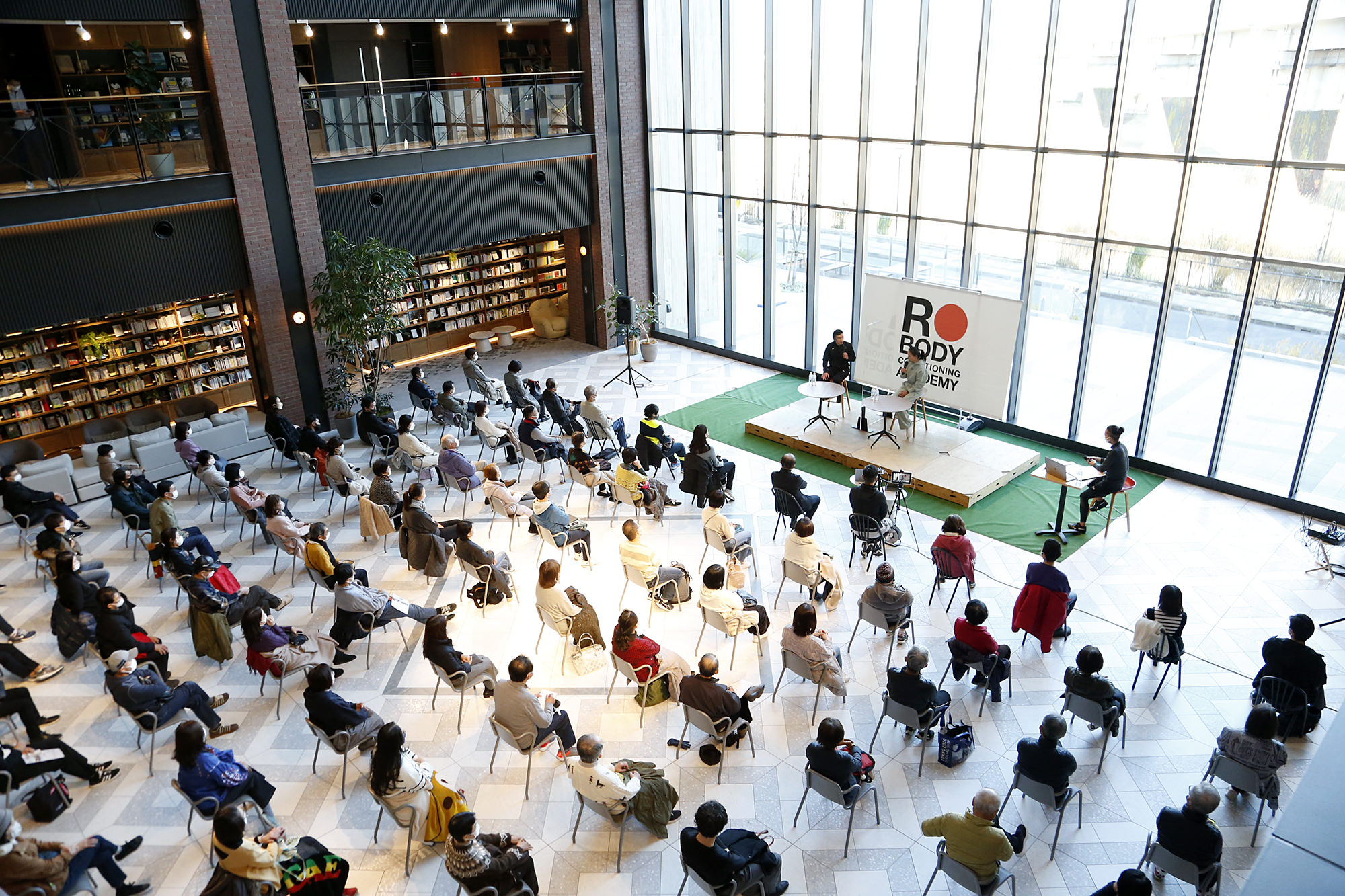
* This conversation took place in December, 2021 at Koil Terrace in Kashiwa-no-Ha.
Suzuki : It's been nine and a half years since we first met about your injured left calf muscle - time sure does fly!
Date : It sure does. I'm guessing, with being an active sportswoman, I was quite on edge back in those days? (Haha)
Suzuki : Well, there was the usual tension and focus that comes with being a top athlete, but nothing more. You weren't impolite or anything like that.
Date : That's good to hear! During tennis matches, I have to show my strong side, but when getting my body taken care of, I have to show my vulnerable side instead, right? However, even though it was our first meeting, I felt like you created an atmosphere where I could open up and speak honestly.
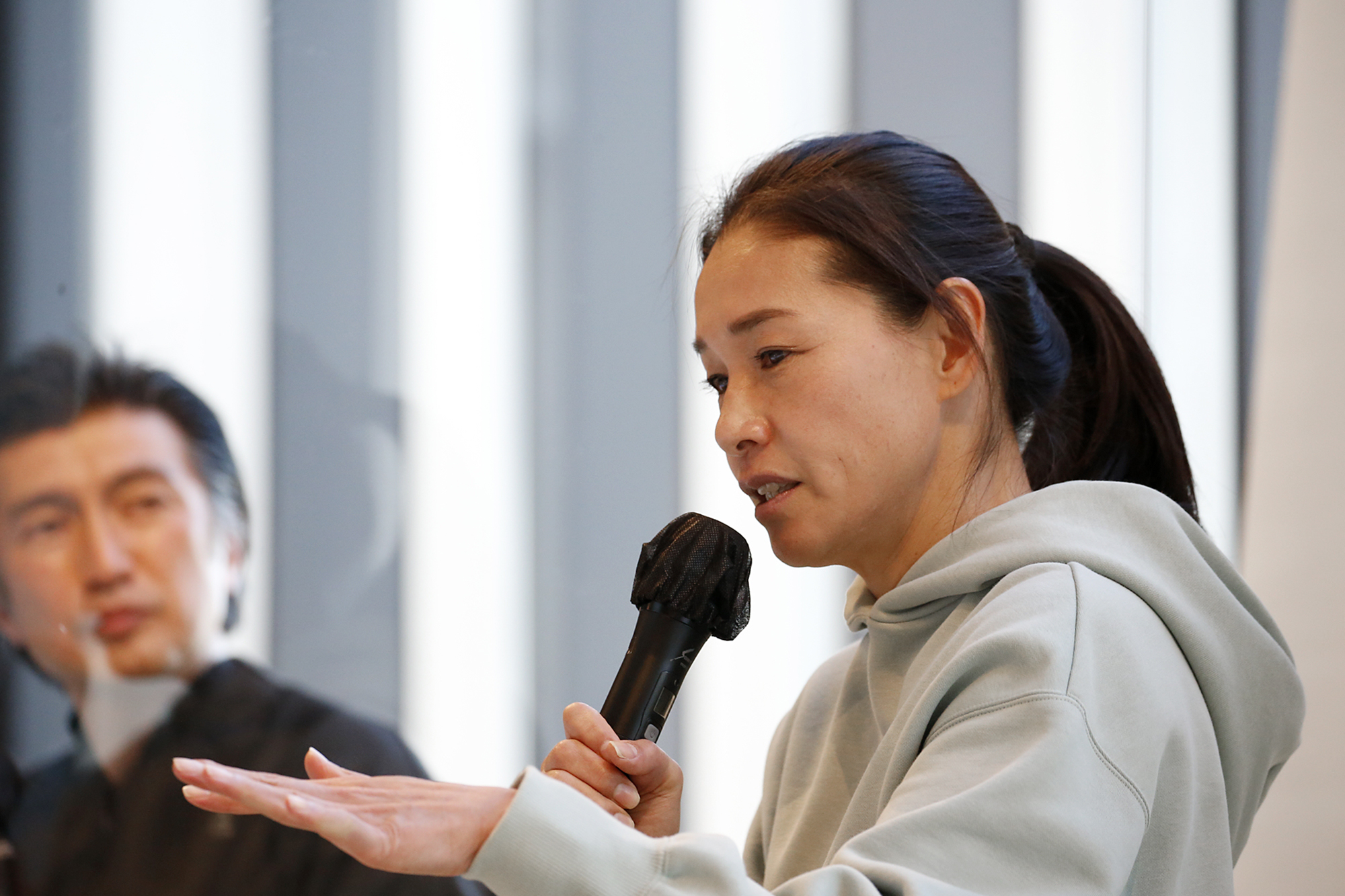
"Playing sports and exercising makes me feel alive"
Suzuki : You're currently coming to R-body twice a week, is that correct?
Date : Yes. I arrive early and do a 30-minute warm up by myself, and then have a 50-minute personal training session. After that, I go for a leisurely jog around the Imperial Palace - just one lap. I do this routine twice a week, plus I still play tennis once a week. Playing sports and exercising makes me feel alive. It's been four years since I retired, and every day I've become more aware of how important it is to keep exercising.
Suzuki : Over 500 Olympians and top-level athletes have taken conditioning training at R-body, but only two have continued after retirement. One of them is yourself. Can you give us some insight into the reasons?
Date : Well, recently I've taken up hiking and also got back into skiing again, so I want to be in the best possible shape for those activities, plus I want to keep playing tennis for as long as possible. To that end, I've been doing conditioning training at R-body, especially focusing on the areas around my knees and shoulders which have undergone surgery.
Suzuki : I see. And since we are talking about conditioning training, let's quickly dive into what it means. For me, it literally means improving one's physical condition. And for 100 people, there are 100 types of ways to do that, and it doesn't necessarily have to mean doing exercise. For some people, simply getting an extra couple of hours sleep each night could be the conditioning they need to feel at their best. For others, if drinking tomato juice in the morning makes them feel and perform better, that is also a form of conditioning. In terms of R-body, the conditioning we focus on is to check, correct, and improve our client's functional movement, which means looking at the muscles, nerves, and bones and how they all interact. This type of conditioning is essential not only for top athletes like yourself, but for anyone seeking to become and remain healthy.
Date : People often think that since I was a pro tennis player, I must be able to do anything, but if they saw me at R-body, they'd be surprised! Nearly all of the training I do here is based around things I need to improve on. However, I know that it's only by working on and eliminating my weaknesses step by step that I can improve my overall performance, so I keep at it.
Suzuki : It goes without saying that top athletes are highly in tune with their bodies. They will only do something if it is truly beneficial for their bodies, and they avoid anything unproven or that seems like a short-term fad. At R-body, one of our core values is "to provide top-class conditioning services for everyone". In other words, we want to provide the general public with the same level of conditioning services that top athletes are receiving, and also to educate them about this type of training.
Date : Yes, and honestly what I do, and what the regular members at R-body do, is pretty much the same, except sometimes perhaps there is some difference in terms of intensity or quantity. In fact, when I watch other members training, I sometimes think, “Wow, they can do that? That's amazing!”
Kimiko Date was born on September 28th, 1970, in Kamigyo Ward, in the city of Kyoto. Meanwhile, Takeshi Suzuki was born on February 23rd, 1971, in Okutama Town, on the western edge of Tokyo. Born in the same school year, the paths of these two began approximately 450 kilometers apart.
In 1988, Kimiko Date won the singles, doubles, and team titles at the National High School Tennis Championships (Inter-High). This made her the first Inter-High triple crown winner for 22 years and she turned professional immediately after graduating from high school. She immediately made her mark by reaching the last 16 at the Australian Open, and followed this up by wining her first singles match at the Wimbledon Championships in 1990. The following year, she reached her first tour final as she finished runner-up at the Los Angeles Women's Tennis Championships, bringing her worldwide fame and recognition.
Then, in June 1993, two days before the start of the Wimbledon Championships, in which she was hoping to reach the quarter finals, she was practicing real game-scenario drills when she slipped on a patch of worn-down grass and suffered a near-complete tear of the medial collateral ligament in her left knee. The team's physiotherapist - unthinkable now -hadn't even arrived at the venue yet. Desperate to apply ice to her left knee, she asked where she could get some ice. "Try at the bar" was the response, and so limping to the bar, she was handed a glass containing just six ice cubes.
Around that same time, Takeshi Suzuki was boarding long-distance Greyhounds buses, as he traversed the North American continent on a mission to become an athletic trainer.
His dream was "to support Japanese athletes in winning Olympic medals."
During his senior year of college, he had encountered the word 'athletic trainer' and resolved that he would someday study in America to obtain the NATA-ATC certification, the pinnacle qualification in the world of athletic trainers. However, information about how to become an athletic trainer in Japan at that time was virtually nonexistent. He sent letters to several American universities listed in a guidebook he had managed to get hold of, but received no replies. Realizing he was getting nowhere, he traveled to the U.S. to make inquiries in person, but discovered that the guidebook's information was too outdated to be of any use. He started his search anew at the library, then set off on his journey to find a university that offered the qualification, armed only with a one-way ticket and a suitcase.
Date : One of the things I like about R-body is that it is also a place where you can learn about how the body works. They even have lifesize skeletal models in the gym which they use to explain things. It really helps with your understanding of the science. You realize, "Oh, this is why the pain shows up here - because this other part over here is not functioning properly."
Suzuki : That's right. For example, when you have lower back pain, massaging the area can provide short-term relief, but the pain often returns over time. This is because the root cause of back pain is frequently not emanating from the back itself, but rather something that has gone wrong with your posture. (The same applies to stiff shoulders, too). In this instance, when I say 'posture', I don't mean in a static sense, but rather in terms of when you are moving - specifically, how you move. To correct your movement patterns, you need to train your brain to recognize when the body is moving with proper form, and then it can send signals to your body to perform the correct movements on command. Simply put, the human body won't align itself properly unless you keep exercising in the correct way. Furthermore, once pain appears, it is usually too late. The most important thing is to first understand your body's current condition, identify areas that aren't yet causing symptoms but which could lead to problems down the line, and then take steps to prevent issues by fixing those areas.
"Our goal is to create a society where trainers are not even necessary"
Date : Once I understood the relationship between cause and effect, training became much more interesting, and it became easier to make it a habit.
Suzuki : I sometimes hear people say that R-body training only focuses on the fundamentals, and that there isn't anything that gives you that kind of "training high" or "thrill of accomplishment". What do you think about that?
Date : Well, it's not always a thrill a minute (laughs). But at R-body, I know that the aim isn't just to complete a workout. Instead, since I understand the "why" behind each exercise, I can stay focused even if it's quite basic in nature. Back in my first tennis career, during the 1990s, I trained without understanding the reasons why. Of course, it's fun to work up a sweat, but I also now think that understanding the science behind it makes it much more enjoyable.
Suzuki : One of R-body's goals is to empower people to take full control of their bodies, health and wellbeing. In other words, it's about creating a society where trainers aren't even necessary. While it might be good for business if more people feel they need a trainer to help them with their workouts, that's not our actual goal or what we are about. I mean, if people can do conditioning outside of R-body, then that is great, too. The only thing I definitely recommend is getting feedback about your body through the eyes of a professional.
In 1994, Kimiko Date won her first overseas tour title at the New South Wales Open, and became the first Japanese player to enter the top 10 of the WTA (Women's Tennis Association) rankings. The following year, in 1995, she rose to number four in the rankings.
In 1996, she defeated world number one Steffi Graf in the Fed Cup. That same year, at Wimbledon, her semi-final against Graf went to 3 sets, with darkness forcing the decisive final set to be played the following day. Although she did not advance to the final, the fierce two-day battle is etched deeply in people's memories. Having reached the pinnacle of her game, she announced her retirement at age 26 and ranked no.8 in the world. She said at the time:
"Just a few years ago, I was thrilled simply to be playing at Wimbledon. To have come this far means there is nothing more I desire. I am truly satisfied. I plan to take some time off to relax, challenge myself with other things I've always wanted to do, then think carefully about finding some new goals and working hard towards achieving them."
The year after Kimiko Date retired, Takeshi Suzuki completed the Athletic Training Program (ATP) at Washington State University's College of Education in almost the shortest time possible (just two and a half years), and also passed the NATA–ATC examination. He then started graduate school at California University of Pennsylvania, and was earning enough to cover both living and study expenses when out of the blue, he received a call from Japan.
"Would you like to help coach the Japanese national freestyle skiing team?"
Supporting Japanese athletes in winning Olympic medals was the reason he chose to become an athletic trainer in the first place, so it was practically a no-brainer. He quit graduate school, moved out of his apartment, and returned home. He was giving up a lot, as the Japan Ski Association offered him a stipend of just 3,000 yen per day.
In 2002, at the Salt Lake City Olympics, he was a coach to Tae Satoya, who went on to win a bronze medal in the women's moguls event. Two years later, in 2004, (at the same time that Kimiko Date was running her first full marathon in London in 3 hrs, 27 mins, 40 secs) Takeshi Suzuki went on to establish his own training company, called R-body Project.
Date : In terms of the Olympics, I competed twice, in Barcelona and Atlanta, but I didn't know about the existence of a dedicated fitness center for the athletes at those venues.
Suzuki : Yes, and even at the recent Tokyo Games, people were surprised to find out there was such a facility. In fact, IOC rules state that the Athletes' Village must have both a polyclinic (a large medical facility with testing equipment) and a fitness center where all athletes can train. So they did exist in the past, but the two facilities have traditionally been located in completely separate buildings from each other. So that is something we wanted to change at the Tokyo Games.
"I got goosebumps all over my body."
Date : Why is that?
Suzuki : Well, the medical side and fitness side have traditionally been seen as separate services, but we believed that in order to provide proper athlete support, that incorporates the latest scientific knowledge, we needed to integrate the medical and fitness facilities under one roof. This would allow for smooth collaboration and information sharing between the medical side and the fitness side. This is absolutely essential in the modern age. So to house the two facilities under one roof for the first time at the Tokyo Olympic and Paralympic Games, that is something I'm extremely proud of.
Date : That was something you really pushed for, didn't you? How long did it take to get the facility up and running?
Suzuki : Well, preparation for the next Games starts immediately after the previous ones finish, so this time it took five years from the Rio de Janeiro Games through to the delayed Tokyo Olympics.
Date : I heard that the layout of the fitness center was significantly changed, too?
Suzuki : Yes. Like at R-body, we made the conditioning workout area much larger. I had total conviction in the changes, but standing alone in the massive fitness center just before opening on the first day of the Village, I got goosebumps all over my body. I wondered what I would do if no one came!
Date : What were the results?
Suzuki : Total facility users were about 54,000 for the Olympics and about 18,000 for the Paralympics. Peak daily visitors were about 3,000 for the Olympics and 1,300 for the Paralympics.
Date : That's an incredible number of people coming to the facility.
Suzuki : Yes. There was a lot of interest in the conditioning facilities and we got great reviews from the users. Some countries even filmed videos to take back home so they could look to re-create some of the things we had put in place.
Date : Times have really changed, haven't they? Everything is becoming much more scientific nowadays. Even the International Tennis Federation now requires a gym to be built wherever a tournament is held.
Suzuki : Yes, it feels like things have changed a lot over the last few years.
Date : Back in the 90s in Japan, before practice we'd run a few laps of the court, do some warm-up exercises, and that was it. There was no such thing as dynamic stretching.
Suzuki : One of the biggest changes I've noticed whilst working with modern-day athletes is that more and more players now have a high-level of knowledge and understanding regarding sports science, just like yourself. A generation ago, after practice or a match, players would just flop on the massage tables and say, "Take care of me." However, these days it is rare for athletes to say "Just give me a massage". Players are much more in tune with their bodies, and know how to take care of themselves. They say things like, "This area feels a bit off today, so please work on it like this," or "That area is fine - you don't need to worry about that today," or "Please show me how to do this technique so I can do it myself at home." Players are making these requests unprompted.
Date : Having said that, players these days have a lot more to do though, don't they? The warm-ups and cool-downs are longer than in the past. Trainers will say, "Date-san, since you get injured a lot, make sure you do these exercises every time." I say, "Well, ok, but can't you make it a bit shorter? Max 20 minutes. I'm already arriving at the venue earlier than everyone else to warm up..." They reply, "I understand, but you must absolutely do this, this, and this." I get a bit exasperated, and say "That's too much, I can't handle it!" Haha. I know given my age that it's important, so I understand where they are coming from, but I've had those kinds of exchanges with the R-body trainers too (laughs).
"As an experienced professional who is still playing (having come out of retirement) perhaps there are some things that I can convey to players aiming to compete on the world stage."
In April 2008, Kimiko Date decided to step back onto the court as a professional tennis player for the first time in 11 and a half years. At age 37, she viewed it not a comeback, but as a "new challenge."
In November of her comeback year, she competed at the All-Japan Tennis Championships, and won both the singles and doubles titles. The following year, she made her mark on the world stage by winning the Hansol Korean Open. This victory, at 38 years and 11 months old, stands as the second-oldest in WTA Tour history (after Billie Jean King). At the 2011 Wimbledon Championships, competing at age 40, she faced five-time champion Venus Williams in the second round. Although she ended up losing, the epic 2-hour, 56-minute battle was met with rapturous applause.
While her comeback captured the world's attention, her body, forced to compete against players in their teens and twenties, began to cry out in pain more frequently.
In June 2012, she suffered a severe calf muscle strain in her left leg - the same leg where she had previously ruptured her Achilles tendon. It was at this time that she began to wonder how she could build a body more resistant to injury. The advice given by the three parties she consulted - the WTA physio, the Japan Tennis Association, and her doctor - was remarkably consistent, as if they had coordinated beforehand. They all said "Go to see Takeshi Suzuki at R-body."
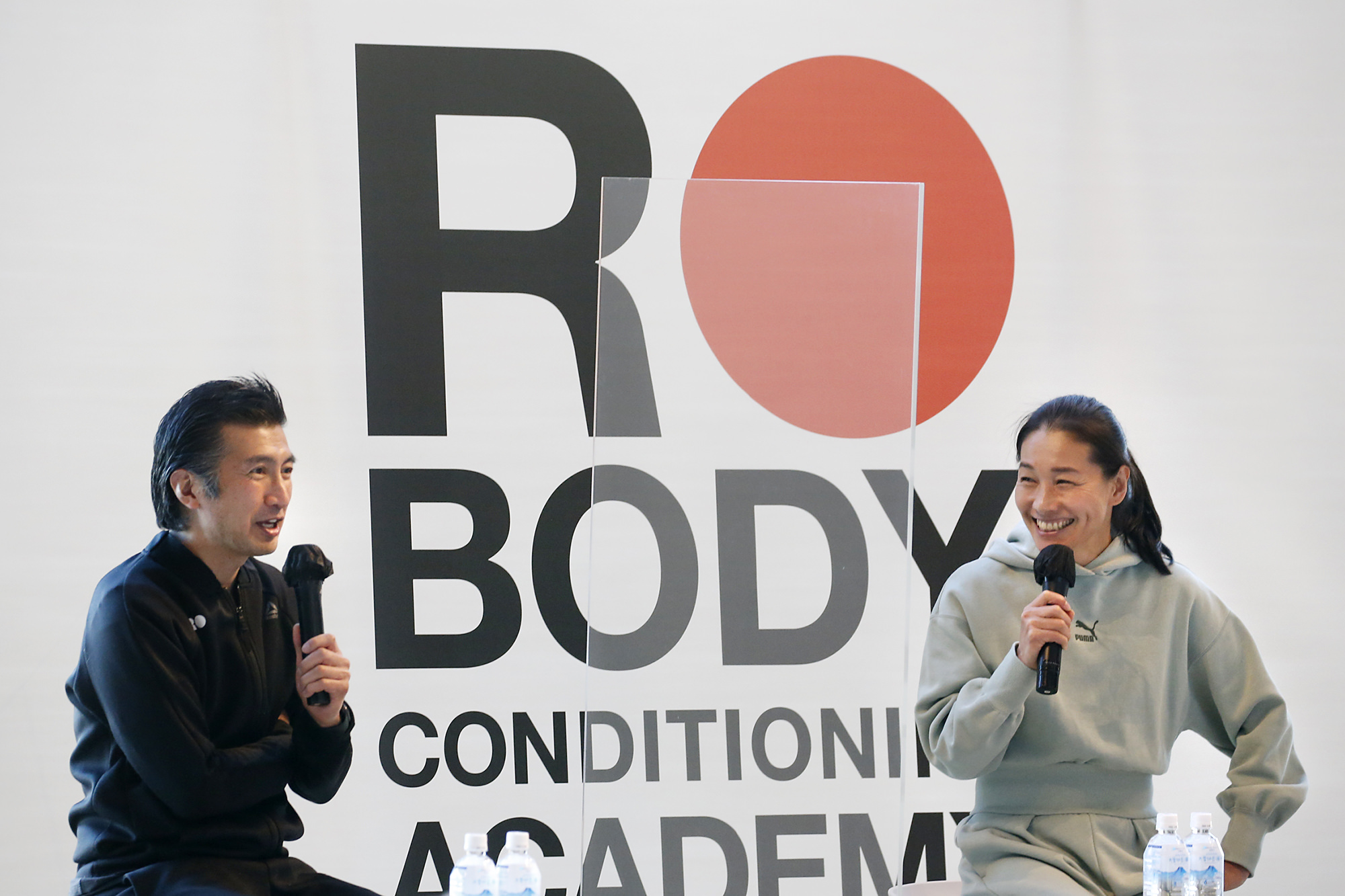
Suzuki : I hear many of your family members have lived to be very old?
Date : That's right, but only the women! My grandmother lived to 98, my great-grandmother to 103, and there's even a woman in the family line who made it to the ripe old age of 108. So I figure I should be able to make it to at least 110. Maybe even 120. And hopefully in good health, too!
Suzuki : I don't have any doubts about it! (laughs)
"I want to keep playing tennis until I'm 100 years old"
Date : The other day, I saw footage of someone over 90 playing tennis with Nadal, and they were still striking the ball perfectly. I also want to keep playing, hopefully until I'm 100 years old.
Suzuki : The average life expectancy for Japanese people (according to the 2000 edition of the Ministry of Health, Labour and Welfare White Paper) is 80.98 years for men and 87.14 years for women. Meanwhile, the average "healthy life expectancy" - meaning the average age at which one can live to without health issues, i.e. without limitations or disability that affect your daily life, is 72.14 years for men and 74.79 years for women.
People need to think about whether they want to be able to travel with their grandchildren, walking with them hand-in-hand, or sitting on the couch waiting for them because their knees hurt. One of the challenges for Japan moving forwards is to try and bridge the roughly 8-12 year gap between average life expectancy and healthy life expectancy. And it is one we must tackle ourselves, because even though we are now in what's called the era of 100-year life spans, the government hasn't promised it will support us until 100.
Date : When I was a teenager, my coach always used to say "The effects of today's training will show up in three months time." Hearing this kept me from giving up, no matter how tough the training was. Even now, when I feel myself slowing down, those words still inspire me. If I don't keep pushing myself now, I know I won't be able to play tennis until age 100. That's why I simply focus on keeping going, taking it one day at a time.
Suzuki : Japan has one of the world's highest life expectancies, and is also a welfare state. With your national health insurance card, you only need to pay 30% of health costs and also receive substantial support. This inevitably makes it harder to focus on prevention. Conversely, few countries worldwide have similar national health insurance systems, so in those places awareness of prevention is much higher. As an athlete, you have conditioning work deeply ingrained in your mindset. But considering average life expectancy these days, I feel ordinary people also need to start developing that awareness, to allow them to enjoy their old age with a healthy body.
Date : I begin every day by asking myself, "How's my body feeling today?". If something feels off, I chat with my trainer and try to solve the issue before it escalates into something more serious.
Suzuki : With a car, you can replace any faulty or broken parts, but with your body you don't have that option. Plus, you can't save up health like you do money, so unless you consistently keep yourself in good shape, you won't be able to do the things you want to do, be that sports or other daily activities. Furthermore, you can't cram like for an exam - with conditioning it is all about making small steps consistently over the long-term. And you also need to remember to have a backup plan in place for when something unexpected happens.
Date : To achieve my goals, I know I must stay healthy and keep my body in good shape. Then I can be active in the future too.
Suzuki : What kind of future goals do you have in mind?
Date : My biggest goal is to help develop female players from the next generation, and bring them up to a level where they can compete on the world stage as quickly as possible. Even though the environment surrounding sports has changed a lot and become more scientific since I first competed on the world stage, I still think I have a lot to offer the younger generation. We have two major stars now, in Naomi Osaka and Kei Nishikori. They based themselves in the US from childhood and rose to the top by benefitting from being in a professional academy environment. Is it possible to replicate those facilities and environments in Japan? Personally, I believe it is possible. We've already started the groundwork and are working towards securing a large space somewhere in Japan to build an academy, where I hope to develop the next generation of children to achieve their sporting dreams.
Suzuki : Please make it happen.
Date : I'll be counting on you to provide condition services to support the academy.
Suzuki : Understood! I'll also do my best to stay healthy until I'm 120, too!

KIMIKO DATE
Professional tennis player. Turned pro immediately after graduating high school. Reached the semifinals at the Australian Open, French Open, and Wimbledon.
Career-high ranking of No. 4 in the world. Retired for the 2nd time in 2017 after two decorative tennis careers.
Current focus is on developing junior players and improving the tennis environment in Japan. Also helps to design and produce tennis courts and sports studios amongst her other ventures.
SPECIAL TALK SESSION
-
No.06With this body gifted to me by my parents, I want to make the most of my life
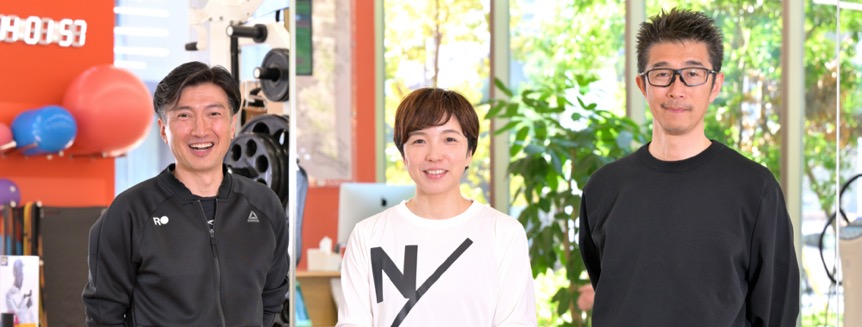
Nao Kodaira x Masahiro Yuki x Takeshi Suzuki. (R-body)
-
No.0515cm of Infinite Potential.
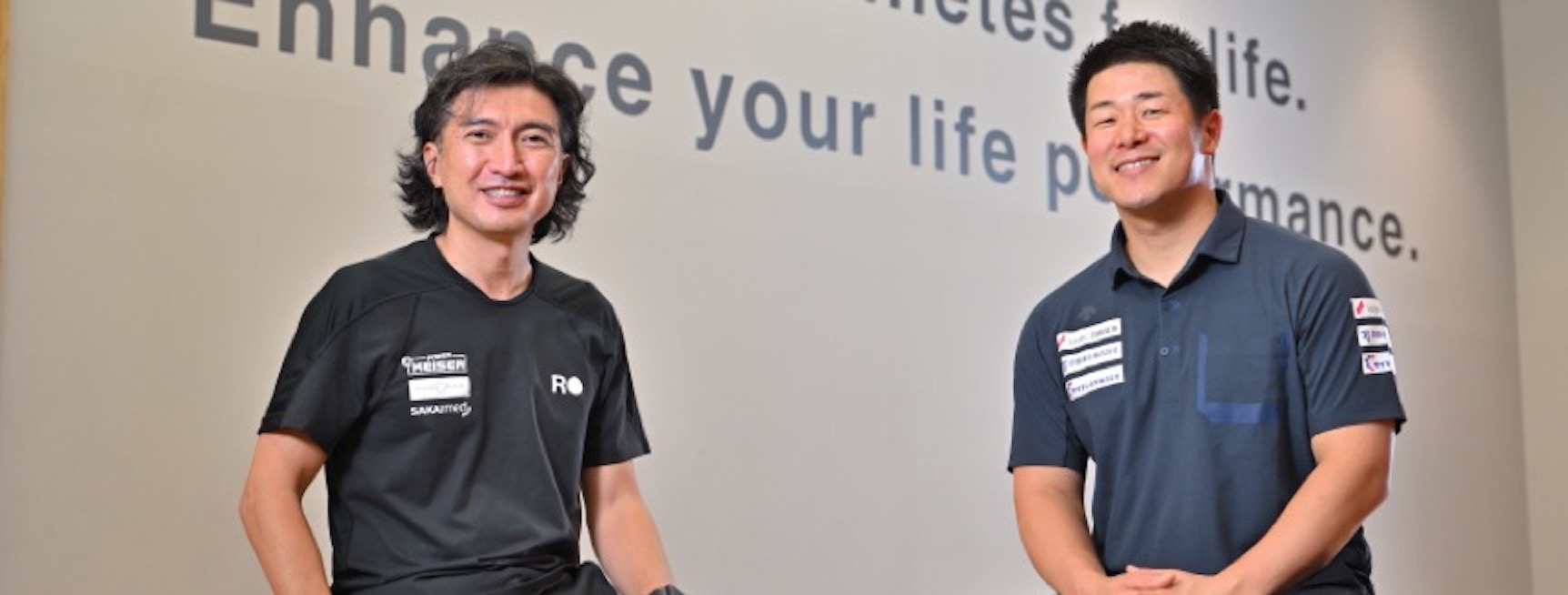
Hiraku Misawa x Takeshi Suzuki. (R-body)
-
No.04To avoid going down a rabbit hole.
Yuji Naito x Takeshi Suzuki (R-body)
-
No.02Raising the Profile of Japanese Athletic Trainers
Kosuke Kitajima x Takeshi Suzuki. (R-body)
-
No.01Getting to Know Your Own Body
Masumi Kuwata x Takeshi Suzuki. (R-body)