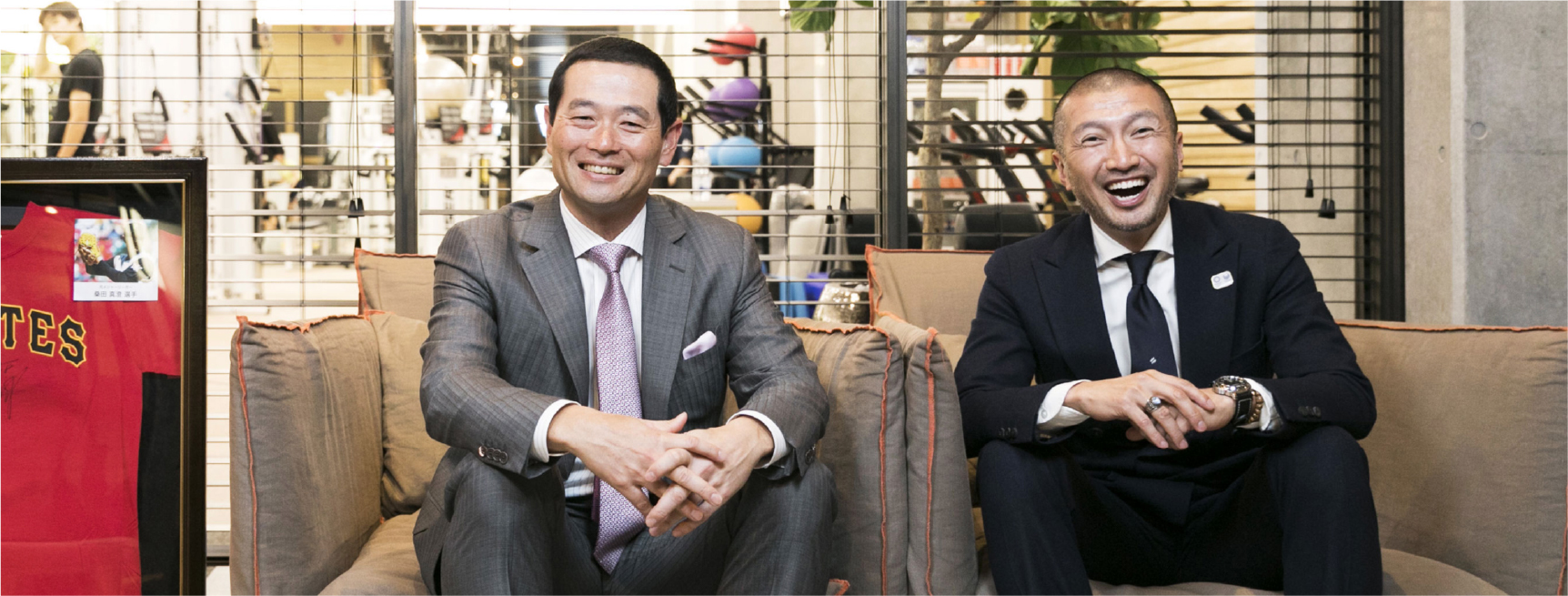
In-Depth Conditioning Discussion No.0515cm of Infinite Potential.
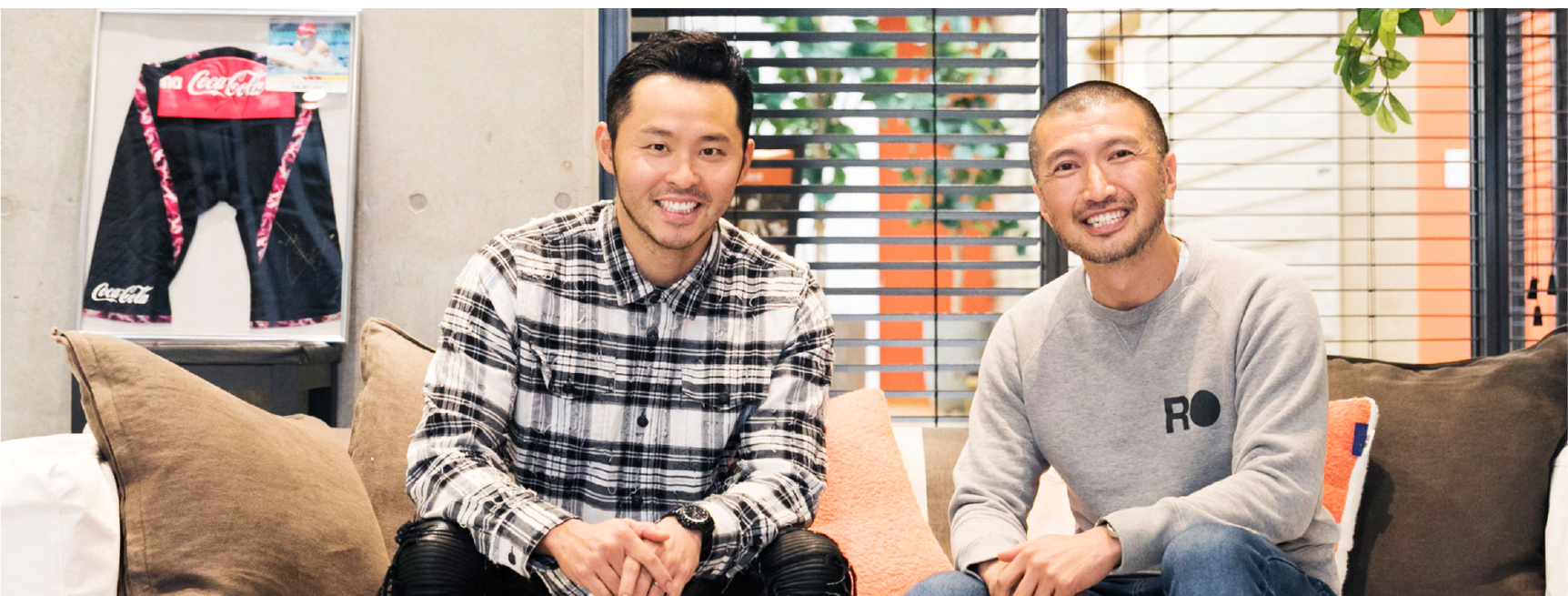
Hiraku Misawa x Takeshi Suzuki. (R-body)
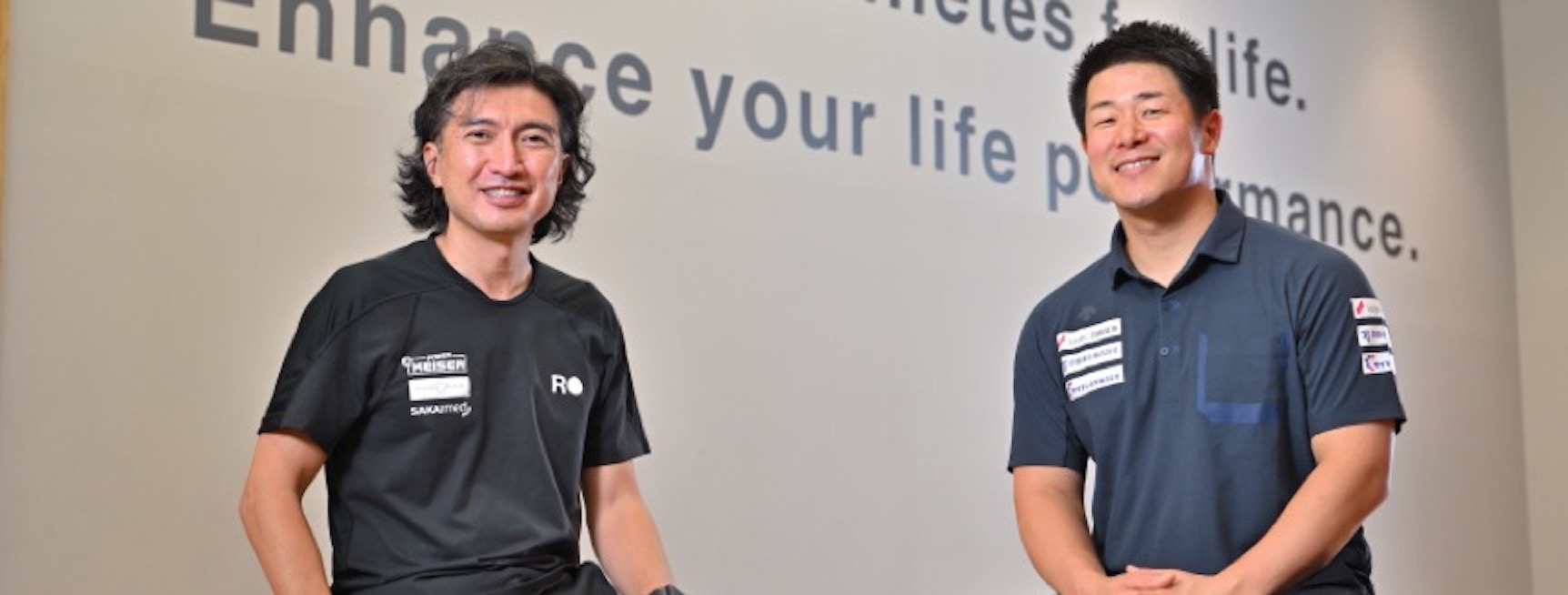
Hiraku Misawa lost his left leg just before entering elementary school. Even so, thanks to his innate athleticism and fierce competitive spirit, he still jumped farther than anyone else, chased soccer balls around, and served as the ace pitcher, cleanup hitter, and captain of his baseball team. "The only thing I regretted losing was the sense of speed." However, even that he regained through skiing, which he took up in the second grade of elementary school, and in which he made the national team by his third year of junior high school. He competed in five consecutive Winter Paralympic Games. He stood on the podium three times at World Cups and World Championships. In 2013, wanting to fulfill his life-long dream of "becoming the best in the world", he joined R-body. "Top athletes, able-bodied people, and people with disabilities - at the end of the day, a body is a body." He went back to square one, and over the next decade he continuously made improvements to his physical condition, using conditioning training to find potential even in 15 centimeters.
Suzuki : Having been involved as a coach at nine Olympic and Paralympic Games combined, including the 2020 Tokyo Games, what struck me most was how Paralympic athletes have a keener sense of communication, and also a remarkably positive approach to communication.
Misawa : The regular Olympic athletes possess extraordinary athletic ability; they're like superhumans who can do anything by themselves. But for us Paralympians, as people with disabilities, there are certain things we can't do alone. We absolutely need support from those around us. So, it's natural that the amount of communication we need is greater than that of regular Olympic athletes.
I never say that I "give hope" or "give inspiration" to others
Suzuki : I feel Paralympic athletes are generally very coachable, always open to guidance and advice, and you are definitely one of the prime examples. Your ability to listen to others, learn from them, and then implement those things yourself, is remarkably high.
Misawa : Well, I think it stems from building a positive relationship between the coaches and athletes, where both can feel comfortable speaking their mind. That's why I always talk frankly with yourself, Takeshi, too. Of course, I have many things I want to ask you, and you also ask me things to check how I'm feeling or what I want to work on, so we need a lot of communication.
Suzuki : For a coach-athlete relationship to work, it's not simply about teaching and learning; it's also about getting to properly know and understand each other.
Misawa : That's right. When I joined the Japanese national team and stood in the heart of the European Alps, I realized how vast the world is and how small I am in comparison. That sensation helped to draw me deeper into skiing. Experiences and knowledge can expand your world, spark interest, and lead to new challenges. Without it, you can't even get started. I hope that everyone here today, by learning about the Paralympics and hearing my story, can also take away some positive things to help them in their own life.
Suzuki : Another thing I often sense when talking to you, is how you have a very astute sense of how humans rely on each other for support, to live successfully in this world.
Misawa : I often hear phrases like "you give hope to others" or "you are an inspiration to others", but I disagree. Dreams and courage aren't things that can be given; they're something each person possesses within themselves. The only reason I'm able to ski is thanks to the support of the people around me. So actually, I'm the one who's the recipient of courage and being able to live out my dreams. That's why I absolutely never say that I "give hope" or "give inspiration" to others in interviews. All I can do is to focus wholeheartedly on the task at hand. If I keep striving, eventually support will come from those around me, without me even having to reach out. That's what I believe.
Suzuki : You were in a traffic accident when you were six years old, right?
Suzuki : Yes. December 22nd. I ran out into the road holding a present my father had bought me, just as a 10-ton truck was passing through. My father, who witnessed the accident, said he thought I was dead. It seems I managed to pull my right side away just before being hit, but my left leg got caught under the tire and had to be amputated. After the surgery, my mother said, "Your left leg has gone to heaven, but since you still have your life, please make the most of it." I asked her, "Can I still ride a bike?". She said "Yes, you can. You can still do anything if you put your mind to it, so don't worry." Since then, my motto has been "It's not about whether you 'can' or 'cannot' do it, it's about whether you 'will' or 'will not' do it." My positive approach to everything stems from those words from my mother. I am truly grateful for them.
______"New pitcher. The next pitcher will be No.8, Yamazaki. The coach called out my junior, a student from the 2nd grade…"
In the fall of his third year of junior high, Hiraku Misawa retired from the school baseball team where he had served as ace pitcher, cleanup hitter, and captain. His next challenge was to enter the 54th All Japan English Speech Contest. He passed the Nagano Prefecture preliminaries, and progressed to the national tournament preliminaries. His speech was titled "Dear Hamlet, I Got the Answer."
______ That's right, I was the starting pitcher. But after giving up five runs including ten walks / HBPs, I was pulled in the middle of the third innings and replaced by a sophomore pitcher. As I hung my head and headed for the bench, my teammates said, 'Why do you never try to pitch strikes? You shouldn't worry about getting hit, we'll catch it and get them out. You shouldn't be afraid to count on us - we've got your back.'
"Relying on others" - that was the one thing I hated most. My way of doing things was to solve everything by myself, without depending on anyone. Is it better to rely on others, or do everything yourself? That is the question. Which is more important?
I know I have a handicap. At age six, I lost my left leg in a traffic accident. My parents were devastated, but they still desired for me to become independent. [Excerpt from his book "15-Year-Old Hiraku's Challenge: The Story of the Ace with the Prosthetic Leg and His Teammates’]
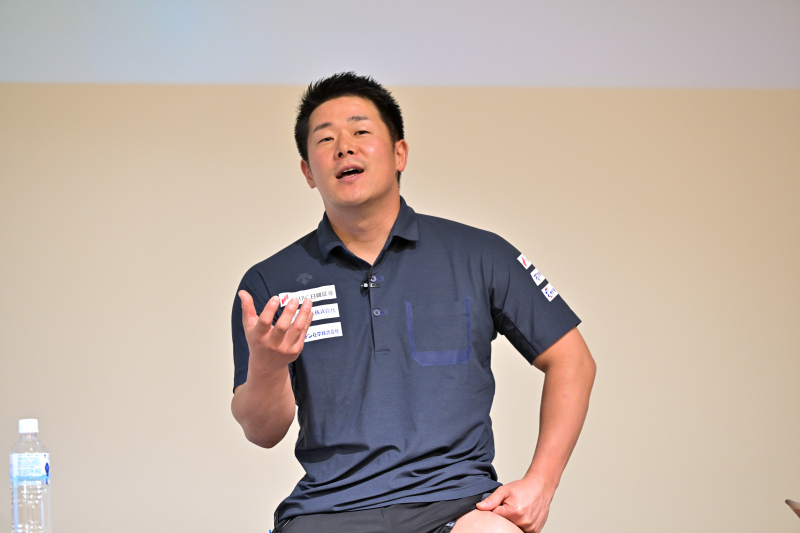
Suzuki : When I first met Mr. Misawa about ten years ago, I clearly remember feeling how much potential he possessed. It was obvious he was going to go places.
Misawa : That was back in 2013, when I was a university student. A childhood friend from my hometown of Matsumoto was working at R-body and invited me to come along, saying, "Why don't you drop in sometime?" That was the start. At the 2010 Winter Paralympics in Vancouver, I had been certain I could win a medal, but during the second run of the slalom event (which involves the most intricate turning techniques), I fell and missed out. After that, my performances started to decline. I knew I needed to change something, but I didn't know what to do. That's when I started to visit R-body. Back then, if I said I wanted to train, most specialized sports gyms would turn me down, saying, "Sorry, we've never trained people with disabilities before." But for R-body my disability wasn't an issue at all. They took me in as if it were the most natural thing in the world.
Top athletes, regular people, and people with disabilities - a body is still a body
Suzuki : Since some people here today may not be familiar with R-body, let me briefly explain about what we do. First of all, R-body is not a regular fitness gym. Instead, we are a facility that provides conditioning services to help people get into peak physical condition. This means we also work in collaboration with medical professionals, allowing us to offer a comprehensive support package. Next year marks our 20th anniversary. We've supported and trained approximately 1,000 top athletes, and conducted over 300,000 personal training sessions. The wealth of knowledge and experience we've gained allows us to offer top-quality training and conditioning services to the general public, too.
Misawa : Yes, and whether you are a top athlete, a regular person, or a person with disabilities, a body is still a body. At R-body, Olympic athletes and regular people workout side-by-side on the same kind of routines. The only difference seems to be in the amount of volume and load. That's a sight unique to R-body, isn't it?
Suzuki : Yes, because we start everyone off with the basic fundamentals, which contains pretty much everything the body needs. Of course, we get people who want to train specifically for skiing, baseball, or soccer, and so on, but diving straight into sport-specific training usually ends up taking longer to progress in the long-run. If done correctly, our basic training program will usually improve performance. Take squats, for example. Hiraku, could you demonstrate a squat from the side for the audience? Everyone, please watch. It looks like he is doing this squat using both legs, doesn't it? I've been a trainer for 30 years, and I have to say the quality in his technique here is truly astonishing.
Misawa : Before coming to R-body, I was mainly focused on building more muscular legs. I relied on the power of the thigh muscles at the front of my right leg for skiing, but I wasn't utilizing the immense power potential of my hamstrings and glutes, located at the back of the thigh and bum. In fact, if I tried to do a squat, I would just drop my bum down. I couldn't maintain a proper posture at all.
Suzuki : Yes, we started out just practicing how to stand correctly, didn't we?
Misawa : Yes. My back tended to arch, and my core was unstable. So from there, for the first year or so, we did nothing but squats (without weights), just to work on getting me into the correct posture. Then, as my hips started moving properly and I learned to use the front and back muscles in tandem, I was gradually able to move my whole body much more efficiently. Back when I was relying on my quad muscles alone for skiing, it put stress on my knees, and I always had to ice them after practice. But I found I didn't need to do that anymore.
Hiraku Misawa's speech at the English speech contest continued as follows:
____My parents gave me a set of skis, and I joined the local Nagawa Ski Club in Matsumoto. The first thing the coach told me was, "Whatever you can do by yourself, be sure to do it by yourself." Even when I fell on the slopes, no one came along to help me up. Falling over again and again, I eventually learned how to get up on my own. After practice, I gathered the long, heavy slalom poles alongside the adults. No one helped me then, either. Not even my parents. They just watched and encouraged me, saying "You can do it yourself. Just keep trying."
I practiced desperately. Several years later, having honed my skills through hard work, I competed in the Japan Paralympics and won second place. I realized that if I tried hard enough, I could accomplish anything.
How could I, someone who trusted only myself, ever come to rely on others? When I entered junior high, I joined the baseball team and became the ace pitcher. Overconfident in my pitching, I often made mistakes, leading to me walking batters and losing games. My coach and teammates repeatedly told me, "Trust your teammates. Don't be afraid to let the opponents hit it sometimes."
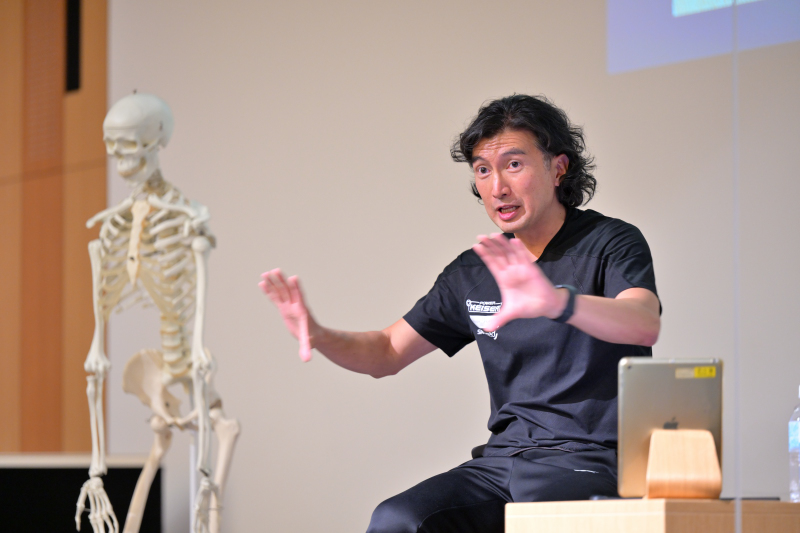
Misawa : (Pulling up the hem of his shorts) As you can see, my left leg is only about 15 centimeters long now. When making a left turn whilst skiing, I can use the inside part of my right foot, which is on the outside of the turn, to counter the external forces on the foot, just like an able-bodied person does. But I can't do that when making a right turn. I have to try to resist external forces with the outside of my right foot, which makes it really hard for me to maintain my balance. When I mentioned this during a conditioning session at R-body, Mr. Suzuki asked me, "What do you do with your left leg during right turns?". I replied, "Well, I don't really do anything with it." He said, "But you still have some muscles in your left leg, right?". "Yes." I said. "Then, let's try to consciously move your left leg a little", he suggested.
Suzuki : When you get to the top level of your sport, like Hiraku, there are usually a few subtle details that emerge that can impact performance by making some specific changes to the way you activate your muscles, or adapting movements to your body's unique make up. In his case, since the left leg still had some functioning nerves and muscles, the challenge was to see if activating these could induce some kind of change. Note though, that this was only undertaken after thoroughly mastering the basic training and conditioning programs.
My perception of not having a left leg changed.
Misawa : When I started to consciously focus on activating and moving my left leg, I realized that those 15cms of leg actually held immense potential. Before that, I could barely manage to rock it back and forth. But by engaging my iliopsoas muscle, I could now move it in various directions - flexion and extension, abduction and adduction, external rotation and internal rotation - and this has helped to dramatically improve both my body's efficiency of movement and my overall balance.
Suzuki : His right leg, and now his left leg, have both developed to a level that completely surpasses the traditional assumptions and theories of sports medicine. Working with an athlete like this is truly eye-opening from that perspective.
Misawa : What changed most was my mindset, which had previously dismissed my left leg as being non-existent after the accident. For example, by focusing on slightly engaging my left leg when doing squatting exercises, that has helped to improve the quality of my turns when skiing. It made me realize that the potential of the human body is limitless; it's only one's mindset that puts limitations in place.
Suzuki : Another important point when training is visualization. For example, when doing squats, are you just doing a regular squat like everyone else, or are you doing it whilst visualizing your performance on the snow? That mindset is a crucial difference between becoming elite or not.
Misawa : Also, since I only have one leg, it means that training inevitably takes more time than for a regular person, plus increasing the amount of skiing I do increases the risk of injury. So for me, I'm looking to make the most of each conditioning session, and then get up to peak performance whilst doing the minimal amount of skiing practice possible.
Suzuki : As long as you keep your body in good shape, you can work towards peak performance by using conditioning exercises to simulate skiing motions. As they get older, top athletes all start to say this is the case.
_____Until that point, I believed that having to rely on others was a sign of weakness. I didn't want that; I always wanted to be the hero. However, in the next tournament, I was selected as a starter again, and this time, I trusted my teammates. It led to the best pitching performance of my life. We ended up losing the game, but every teammate said to me, "Great pitching today!" I realized how selfish I had been. In order to hide my disability, I had turned down all the help and kindness offered by everyone around me.
It felt like a weight had been lifted off my shoulders. I realized that although I needed help with various things, it wasn't just because I'm disabled - it's because I'm human, like everyone else.
I have a dream. It is to compete as a one-legged skier in the Paralympics and the Olympics. I've decided to attend a high school in New Zealand next year to practice skiing and take it to the next level. My goal is to win a gold medal, and to do that I think I need to not only believe in myself, but also draw on the strength and support of those around me. That is one lesson I've definitely learned; never be afraid to accept help from others.
Thank you for reading my story.
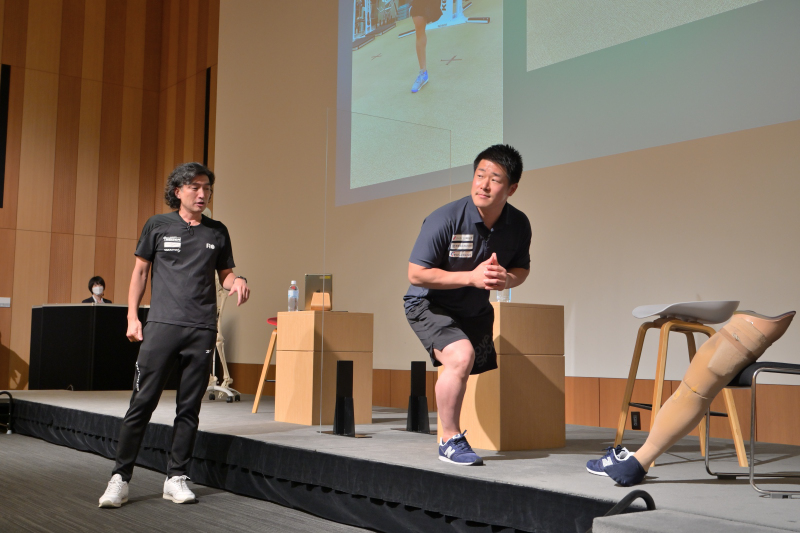
Misawa : It's been 20 years since I was first called up to the national team, and I've been fortunate enough to compete in five Paralympic Games. This year, I've decided to step down from the national team, and 'm currently debating whether to continue competing, or whether to shift my focus to help the team in some other way.
Suzuki : What kind of activities are you thinking about?
Misawa : Well, I'd like to help create the ideal environment where the national team members can become the best in the world. Until now, I've led the team by setting an example for the younger members. But stepping away from competing has allowed me to see things from the organizational side, which has revealed insights I didn't have before. I'm gradually understanding what must be done to develop world-class athletes. I've decided to spend this year going over everything in my head, and imagining various possibilities and outcomes. At the end of the day, it will come down to "do it or don't do it" - making a decision and taking action is the only way forward.
We have no choice but to stick to the principle of "either you do it, or you don't do it"
Suzuki : About 30 years ago I went to the U.S. to earn my athletic trainer certification. I did this because I had a dream to help professional athletes. When I was asked to return to Japan, the pay they offered me was a paltry 3,000 yen per day. Athletic trainers weren't recognized at all back then, and the term "conditioning training" was practically nonexistent. Driven by the desire to make athletic trainers recognized and spread the value of conditioning training, I decided, if I may borrow a phrase from you, that the correct mindset was not "can I do it?" but "will I do it?", and thus I launched R-body. An essential requirement of conditioning training is having the knowledge and experience to collaborate with healthcare professionals. While athletic trainers are healthcare professionals in the U.S., that's not been the case in Japan. Therefore, in order to achieve our mission of "boosting the life performance of people, communities, and the nation as a whole," we've pushed forward along the extremely niche and risky space between healthcare and the service industry. Hearing you speak today, I feel inspired to continue. I feel we have no choice but to stick to the principle of "either you do it, or don't do it"
Misawa : One time, my father, who had been drinking, suddenly said, "You've done so well to come this far. I actually thought that you'd never be able to play sports again." Of course, it's a natural reaction to imagine that losing a leg will mean that you can't play sports anymore, and my relatives all had that initial reaction, too. But imagination of the future is just that - imagination. I think it's all about taking that first step, not stopping, and never giving up. Of course there will be ups and downs along the way, but as long as your body is healthy, you can keep challenging yourself each day with a fresh mindset. That's why I intent to keep doing conditioning training to look after myself. I also haven't decided 100% whether to retire or not, either.
Suzuki : I think a key takeaway we have from today is about the difference between taking self-responsibility and blaming one's circumstances. Every time I hear you speak, I always notice how you replace "blaming outside circumstances" with "self-responsibility". You are someone who deeply considers what you could have done better, or whether there was anything you didn't do but should have. This makes me look at myself, and wonder whether I sometimes make excuses for not doing something. Am I blaming others or outside circumstances when problems arise? From this point forwards, I plan to take more self-responsibility for how things go in my life.

HIRAKU MISAWA
At age 6, he was involved in a traffic accident that resulted in the amputation of his left leg above the knee.
He played various sports from a young age, and began skiing at age 8.
He was called up to the Japan Paralympic Alpine Ski Team at age 15.
He has competed in five consecutive Paralympic Games.
Currently, in addition to his athletic career, he is also a public speaker at schools and companies.
SPECIAL TALK SESSION
-
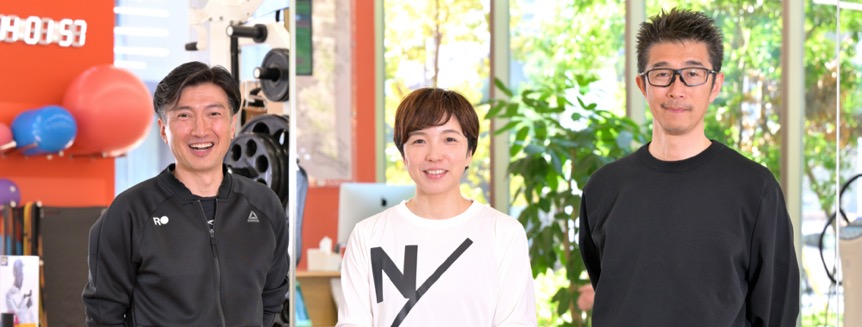
No.06With this body gifted to me by my parents, I want to make the most of my life
Nao Kodaira x Masahiro Yuki x Takeshi Suzuki. (R-body)
-
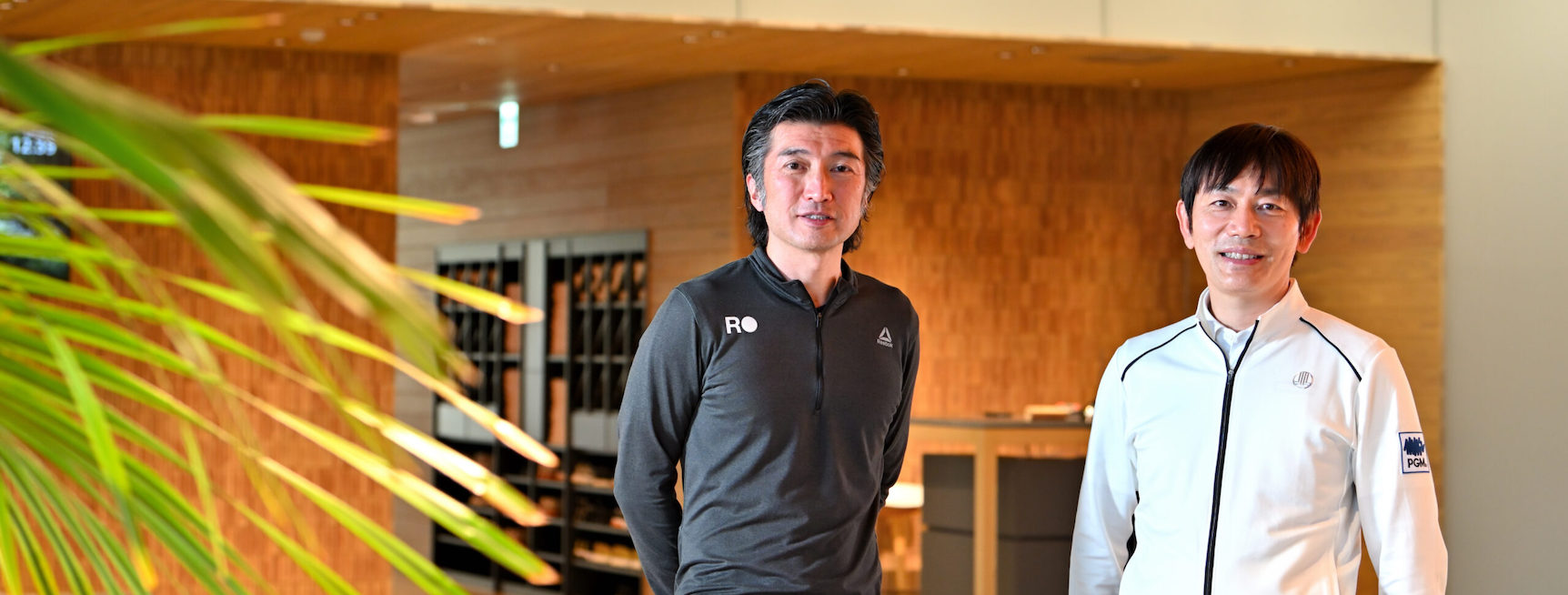
No.04To avoid going down a rabbit hole.
Yuji Naito x Takeshi Suzuki (R-body)
-
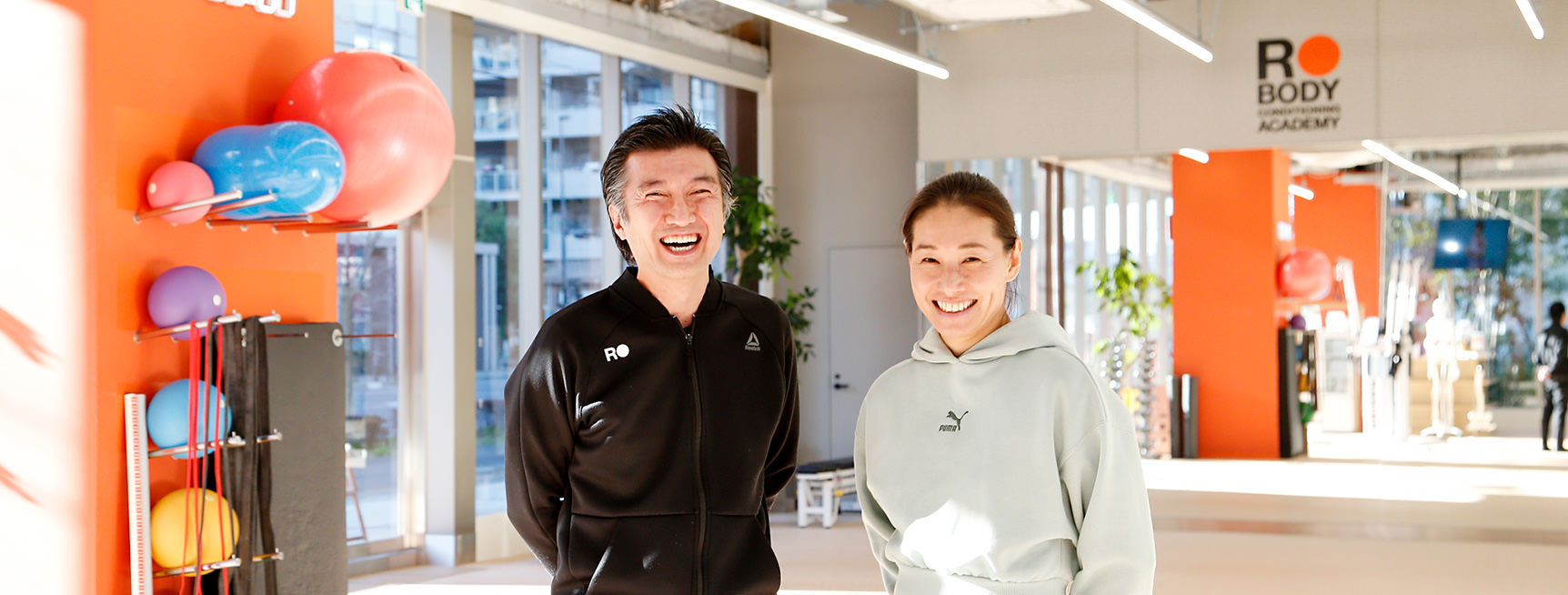
No.03Living healthily until 100 years old
Kimiko Date x Takeshi Suzuki (R-body)
-
No.02Raising the Profile of Japanese Athletic Trainers
Kosuke Kitajima x Takeshi Suzuki. (R-body)
-
No.01Getting to Know Your Own Body
Masumi Kuwata x Takeshi Suzuki. (R-body)